

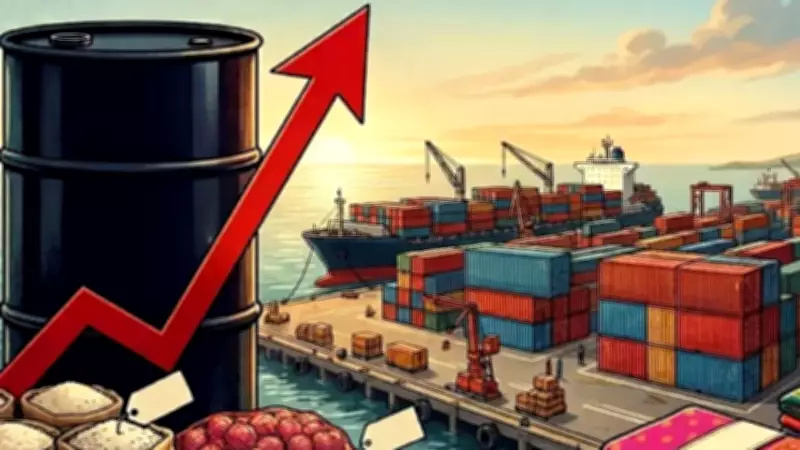
India's Shipping Authority Cracks Down on Unfair Pricing Amid Rising Freight Costs
The Indian government has issued a stern warning to shipping companies, vessel operators, and their agents, urging them to avoid predatory, non-transparent, and opportunistic pricing practices. This move comes as freight costs experience a sharp increase due to disruptions caused by the ongoing conflict in West Asia, according to sources cited by PTI.
Regulatory Action Against Unfair Charges
The Directorate General of Shipping (DGS) released an advisory on Monday after receiving complaints from stakeholders in the export-import (EXIM) trade. These stakeholders raised concerns about the imposition of multiple ancillary charges by shipping lines and their agents, which are perceived as non-transparent and opportunistic. The regulator emphasized that such practices lead to higher transaction costs throughout the logistics chain.
In the advisory, the DGS stated, "In the interest of promoting transparency, fairness, and predictability in the EXIM logistics ecosystem, all shipping lines, carriers, and their agents are hereby advised to refrain from predatory, non-transparent, and opportunistic pricing practices, including levy of exorbitant charges thereby taking undue advantage of prevailing geo-political issue."

Call for Transparency and Fair Trade Practices
The DGS has mandated that operators must clearly communicate all applicable charges upfront to exporters, importers, and other stakeholders to prevent disputes within the trade ecosystem. The advisory added, "They must adhere to fair trade practices and avoid the levy of charges that may give rise to disputes within the EXIM trade and ensure that all applicable charges are communicated clearly and upfront to exporters, importers, and other stakeholders."
Impact of Middle East Conflict on Global Logistics
Freight rates have surged significantly in recent days as military tensions escalate in the Middle East, involving Iran, the United States, and Israel. These conflicts are disrupting shipping routes and increasing uncertainty in global logistics. An executive from a global shipping company noted that the situation is forcing vessels to take longer routes around Africa, resulting in higher fuel consumption and increased operational costs for cargo ships.
Additionally, an analyst at BigMint Research highlighted that crude oil prices, which averaged around $70 per barrel before the conflict, are now hovering near $90 per barrel. This rise in oil prices further contributes to elevated shipping and logistics expenses, compounding the challenges faced by the industry.
The advisory underscores the government's commitment to safeguarding the interests of the EXIM trade community and ensuring a level playing field in the face of geopolitical disruptions.






