

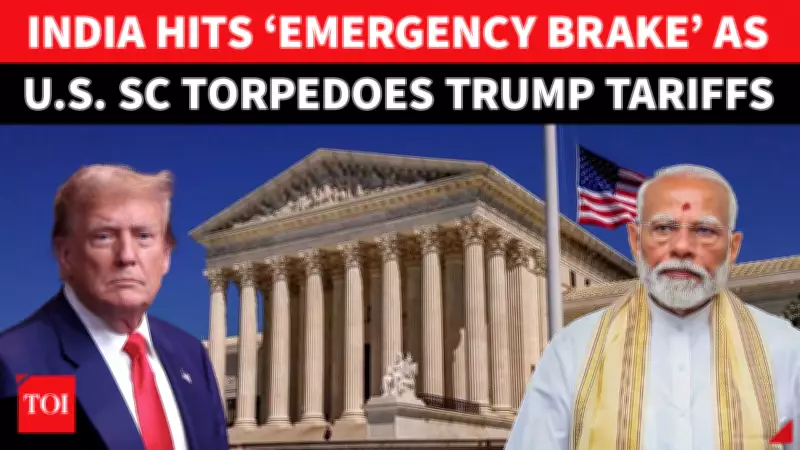
India Pauses US Trade Negotiations Following Landmark Supreme Court Tariff Ruling
In a development that has sent shockwaves through international trade circles, India has officially paused high-stakes negotiations with the United States aimed at finalizing an interim trade agreement. This strategic decision comes directly in response to a groundbreaking ruling by the Supreme Court of the United States that fundamentally reshapes the legal framework governing American trade policy.
Supreme Court Decision Limits Presidential Authority on Tariffs
The Supreme Court delivered a narrow but decisive verdict that establishes a president cannot unilaterally impose or modify tariffs without congressional approval. This ruling reinforces the constitutional principle that taxation authority, including tariff implementation, rests squarely with the legislative branch rather than the executive office.
This judicial clarification has immediate implications for trade relations that developed during the Trump administration, when President Donald Trump frequently utilized tariff measures as a central component of his economic strategy. The court's decision effectively challenges the legal foundation of such unilateral actions, creating new parameters for future trade negotiations.

India's Calculated Response to Changing Legal Landscape
According to reports from Reuters, Indian officials have deferred a planned diplomatic visit to Washington that was specifically scheduled to finalize the interim trade framework between the two nations. This agreement was originally expected to take effect in April, but now faces significant uncertainty as both countries reassess their positions in light of the new legal reality.
The pause reflects India's strategic caution amid lingering tariff tensions that escalated under the previous US administration. With the Supreme Court ruling creating ambiguity about future American trade policy mechanisms, Indian negotiators appear to be taking a measured approach to ensure any agreement aligns with the revised legal framework.
Broader Implications for Global Trade Relations
The ripple effects of this development extend far beyond bilateral relations:
- The Supreme Court decision establishes a precedent that could influence trade negotiations between the US and other nations
- Global markets are closely monitoring how this legal clarification will affect international trade dynamics
- The ruling may prompt other countries to reconsider their negotiation strategies with the United States
- Uncertainty now clouds the path forward for the proposed India-US trade framework
This pause in negotiations represents a significant moment in the evolving relationship between two of the world's largest economies. As both nations navigate this new legal landscape, the future of their trade partnership remains uncertain, with observers watching closely for indications of how each side will adapt to the changed circumstances.






