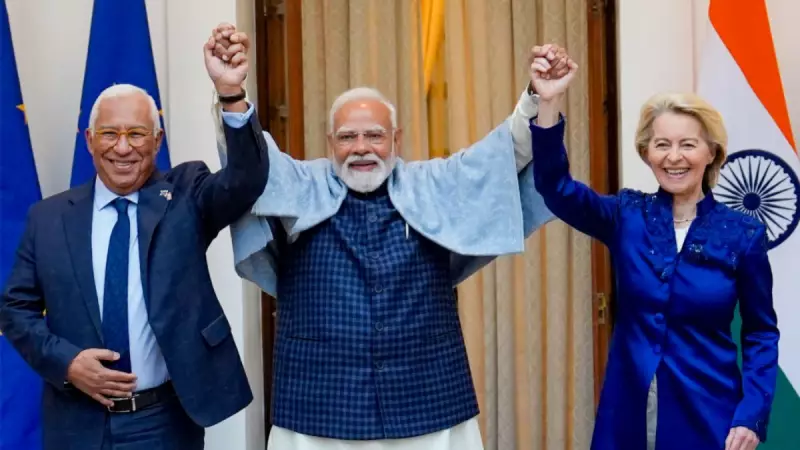
India and EU Forge Historic 'Mother of All Deals' with Ambitious 2026 Targets
The much-anticipated Free Trade Agreement (FTA) between India and the European Union is being hailed as a transformative pact, with experts dubbing it the 'Mother of All Deals'. This landmark agreement, set for full implementation by 2026, is poised to redefine economic cooperation between two of the world's largest markets, driving unprecedented growth and strategic partnerships.
Massive Job Creation and Economic Revitalization
One of the most significant impacts of the India-EU FTA is its potential to generate approximately 7 million new jobs across various sectors in India. This employment boost is expected to stem from:
- Enhanced market access for Indian goods and services in the EU.
- Increased foreign direct investment (FDI) from European companies.
- Growth in manufacturing, technology, and agricultural exports.
The deal aims to reduce tariffs and non-tariff barriers, making Indian products more competitive and fostering a conducive environment for job creation, particularly in small and medium enterprises (SMEs).

Strategic Push for the IMEC Corridor
Beyond trade, the FTA includes a strong emphasis on advancing the India-Middle East-Europe Economic Corridor (IMEC). This ambitious infrastructure project is designed to:
- Enhance connectivity and logistics between India, the Middle East, and Europe.
- Reduce transit times and costs for goods, boosting trade efficiency.
- Strengthen geopolitical ties and energy security in the region.
The IMEC push is seen as a counterbalance to other global trade routes and a key component of India's strategy to become a central hub in international trade networks.
Aiming for a Quarter of Global Trade
By 2026, the India-EU FTA is projected to help capture 25% of global trade, a substantial increase from current levels. This goal is underpinned by:
- Diversification of trade portfolios to include high-value sectors like digital services, pharmaceuticals, and renewable energy.
- Collaboration on innovation and research, fostering joint ventures in cutting-edge technologies.
- Alignment of standards and regulations to facilitate smoother cross-border commerce.
This target reflects the combined economic heft of India and the EU, which together represent a significant portion of the world's population and GDP.
Challenges and the Road Ahead
While the prospects are promising, the implementation of the FTA faces several hurdles:
- Negotiating sensitive issues such as intellectual property rights and data localization.
- Ensuring equitable benefits for all stakeholders, including farmers and workers.
- Navigating geopolitical complexities and competing trade agreements.
However, with both sides committed to a 2026 timeline, the deal is expected to undergo rigorous discussions to address these concerns, paving the way for a robust and inclusive agreement.
In summary, the India-EU FTA is not just a trade deal; it is a strategic partnership with far-reaching implications for job creation, infrastructure development, and global trade dominance. As negotiations progress, all eyes are on this 'Mother of All Deals' to deliver on its ambitious promises and set a new benchmark for international economic cooperation.