India and European Union Seal Historic Free Trade Agreement
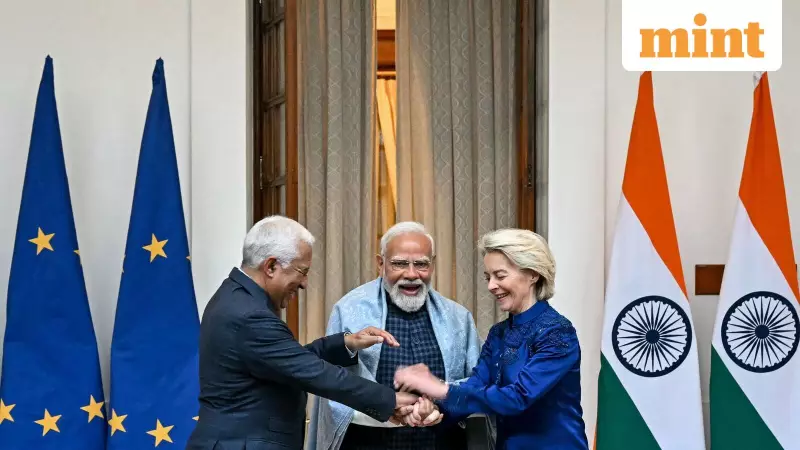
In a landmark development for global trade, Prime Minister Narendra Modi and European Commission President Ursula von der Leyen jointly announced the conclusion of the India–European Union Free Trade Agreement (India–EU FTA) during the 16th India–EU Summit held on Tuesday, 27 January. This monumental agreement, hailed by both leaders as the "mother of all deals," represents the largest-ever trade pact negotiated by India and the EU, setting a new benchmark in their economic partnership.
A Strategic Partnership Amid Global Challenges
The official statement emphasized that this FTA will significantly strengthen economic and political ties between the world's second and fourth largest economies. At a time marked by rising geopolitical tensions and global economic challenges, the agreement underscores a joint commitment to economic openness and rules-based trade, positioning India and the EU as key players in fostering international cooperation and stability.
Key Benefits and Projections of the India-EU FTA
The announcement of this significant trade deal brings with it a host of transformative benefits for both sides. Here are five essential facts to understand the impact of the India-EU FTA:

EU Exports to India Set to Double
According to the EU, the FTA is expected to double EU exports to India within six years. This will be achieved by cutting tariffs on 96.6% of traded goods by value, resulting in estimated savings of 4 billion euros ($4.75 billion) in duties for European companies, thereby boosting trade flows and economic growth.
Boost for Indian Agricultural and Processed Food Sectors
The FTA is poised to provide a substantial boost to India's agricultural and processed food industry. The Ministry of Commerce highlighted that Preferential Market Access will be granted for a range of products, including:
- Tea and coffee
- Spices
- Grapes, gherkins, and cucumbers
- Dried onions
- Fresh vegetables and fruits
- Processed foods
This access is expected to enhance the competitiveness of these Indian goods in the lucrative EU market, opening new avenues for exporters.
Tariff Reductions on EU Goods Entering India
India has committed to immediate and phased tariff reductions on various EU products. Key highlights include:
- Tariffs on alcoholic beverages, such as wine, will be reduced from 150% to 75% initially, with a gradual decrease to 20% over time.
- Tariffs on spirits will be lowered to 40%.
- Additional cuts will apply to a wide array of EU goods, including machinery, electrical equipment, chemicals, and iron and steel, facilitating easier market entry for European exporters.
Exclusions from the Trade Deal
Not all sectors are included in this comprehensive agreement. Certain agricultural goods have been kept out of the deal, such as:
- Soya
- Beef
- Sugar
- Rice
- Dairy products
This exclusion reflects careful negotiation to protect sensitive domestic industries on both sides.
Advantages for Indian Exporters
Following the implementation of the deal, Indian exporters will enjoy substantial benefits. Reuters reported that the EU will eliminate all tariffs on 90% of Indian goods upon launch. Within seven years, zero tariffs will be extended to 93% of Indian products, while approximately 6% of goods will face partial cuts and quotas. Overall, 99.5% of bilateral trade is expected to benefit from some form of tariff concessions, promoting a more balanced and prosperous trade relationship.
Timeline for Implementation
While the India-EU FTA has been finalized, it has not yet been officially signed. The announcement on 27 January confirmed that negotiations have been completed. According to PTI reports, the agreement is anticipated to be signed later this year, with expectations that it could take effect early next year, marking the beginning of a new era in India-EU economic collaboration.