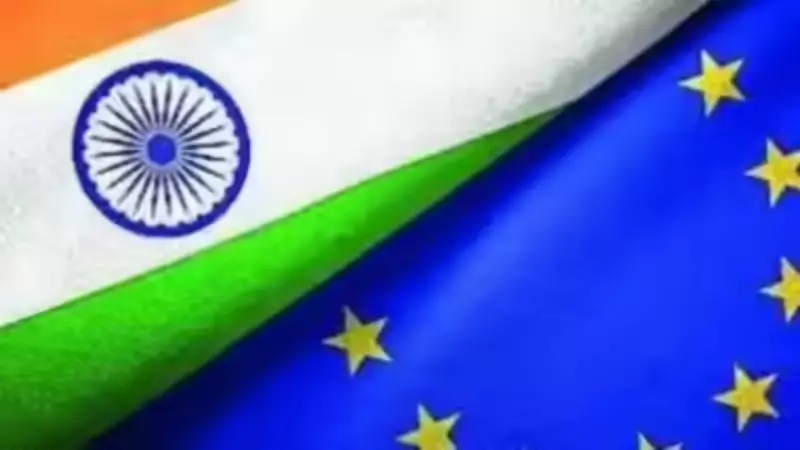
In a significant move to bolster economic ties, India and the European Union have issued a clear directive to their respective officials: resolve all outstanding differences and speed up negotiations to finalize the long-pending free trade agreement (FTA). The push came during a high-level meeting in Brussels, signaling strong political intent from both sides.
High-Level Talks in Brussels Set the Pace
The crucial discussions were held between India's Commerce and Industry Minister, Piyush Goyal, and the European Union's Commissioner for Trade and Economic Security, Maros Sefcovic. The meeting, which concluded Minister Goyal's two-day official visit to Brussels on January 9, 2026, served as a strategic review of the ongoing negotiations.
According to an official statement, both leaders assessed the progress across various negotiating tracks and provided explicit guidance to their teams. Their mandate was to find solutions to pending issues and expedite the process to seal the comprehensive trade deal.

Focus on Key Sticking Points
The ministerial dialogue zeroed in on critical areas that are central to the agreement. The review primarily covered advancements and challenges in Market Access for Goods, Rules of Origin, and Services. These domains often involve complex negotiations concerning tariffs, product standards, and professional mobility.
This top-level engagement was preceded by intensive technical talks. Commerce Secretary Rajesh Agrawal and European Commission Director-General for Trade Sabine Weyand held high-level consultations on January 6 and 7, 2026. Officials from both sides worked diligently during these sessions to "narrow divergences" and bring greater clarity on unresolved matters, effectively paving the way for the ministerial dialogue.
A Strong Political Resolve for Early Conclusion
The statement from the commerce ministry emphasized that the discussions reaffirmed a "strong political resolve on either side to address pending issues through constructive engagement." This mutual commitment is pivotal as both economic powers are keen to conclude the negotiations at the earliest possible opportunity.
The proposed India-EU free trade agreement is seen as a landmark pact that could dramatically increase bilateral trade and investment. A successful conclusion would create one of the world's largest free trade areas, linking a fast-growing economy of 1.4 billion people with a single market of around 450 million consumers.
The latest push from the leadership underscores the importance both sides attach to this strategic partnership. With officials now under direct orders to accelerate the process, stakeholders are watching closely for a breakthrough in the coming months.