

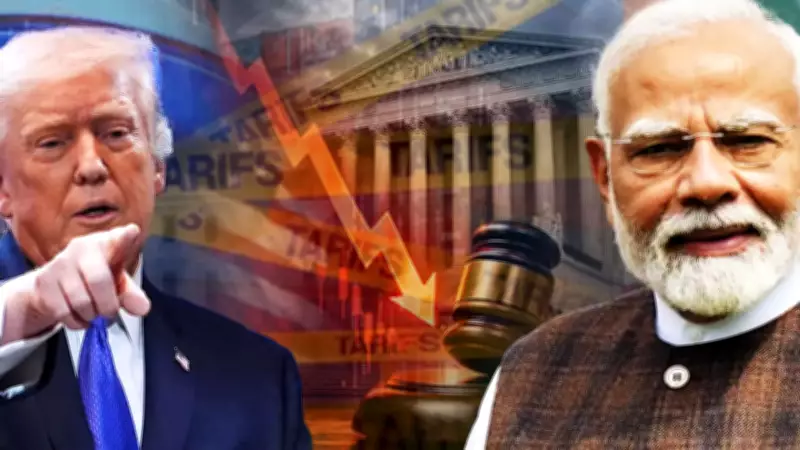
India May Receive Substantial US Tariff Reduction Despite Trump's Defiance
India could be poised for significant tariff relief from the United States, as the White House has signaled a major reset in global trade policy that would establish a 10 percent baseline rate for key trading partners. This development comes despite former President Donald Trump's continued defense of tariffs as a strategic economic tool.
Supreme Court Ruling Triggers Trade Policy Shift
The potential policy shift follows a landmark Supreme Court decision that has curtailed President Trump's sweeping authority to impose tariffs unilaterally. This judicial intervention has created an opening for the current administration to reconsider America's tariff structure and potentially reset rates for major economies including India.
If implemented, this policy change would see India's export duties to the United States drop substantially from the current 18 percent to the proposed 10 percent baseline. Such a reduction would provide meaningful relief to Indian businesses and exporters who have been navigating challenging trade conditions.

Trump Maintains Support for India Relationship
Despite the potential tariff reduction, former President Trump has maintained that the India-US trade agreement remains fully intact. In recent statements, Trump praised Prime Minister Narendra Modi while continuing to defend tariffs as a legitimate strategic instrument in international trade negotiations.
"The relationship between India and the United States remains strong," Trump emphasized, while maintaining his position that tariffs serve important national interests. This nuanced stance reflects the complex dynamics at play in the evolving trade relationship between the two democracies.
Stability in Volatile Global Trade Environment
For India, this development represents a potential anchor of stability in what has become an increasingly volatile global trade climate. The prospect of reduced tariffs comes at a critical time when international trade relationships face multiple pressures and uncertainties.
The potential tariff reduction marks what could be a significant turning point in the India-US trade relationship, which has experienced both cooperation and tension in recent years. While the situation remains fluid and subject to ongoing legal scrutiny, the direction suggests a possible easing of trade barriers that have impacted bilateral commerce.
Broader Implications for Global Trade Architecture
The White House's signaling of a global trade reset extends beyond the India-US relationship, potentially affecting multiple trading partners worldwide. This broader policy shift indicates a possible recalibration of America's approach to international trade following the Supreme Court's limitations on executive tariff authority.
As the situation continues to evolve, stakeholders in both countries are closely monitoring developments that could reshape trade flows and economic relationships. The potential tariff reduction for India represents just one element of what appears to be a comprehensive reassessment of US trade policy toward major global economies.






