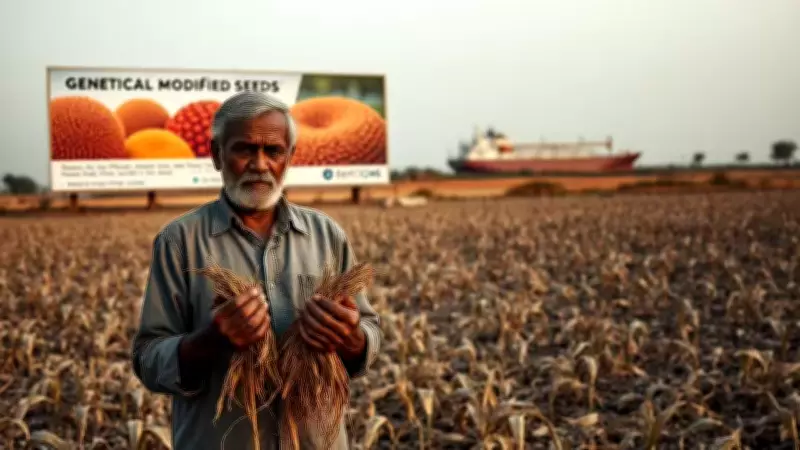
GM-Free India Coalition Urges Government to Block US GM Imports During Trade Talks
As a fresh round of trade negotiations between India and the United States commences in Washington, the Coalition for a GM-Free India, a network comprising farmers and civil society organizations, has formally written to the central government. In a detailed letter dispatched on Monday, the Coalition strongly urged authorities to prohibit the importation of genetically modified (GM) cotton seed oil, animal feed dried distillers’ grains (DDGs), and soybean oil from the United States into India.
Call to Maintain Non-Tariff Barriers on GM Products
In its comprehensive communication addressed to several Union ministers, including Commerce and Industry Minister Piyush Goyal, the Coalition also implored the government to resist any efforts to eliminate GM-related regulations as non-tariff trade barriers. The United States has persistently requested India to address these non-tariff barriers concerning American food and agricultural products, a longstanding point of contention in bilateral trade discussions.
The Coalition articulated that permitting these imports would effectively serve as a backdoor entry for GM food into India, contravening domestic laws that explicitly prohibit such products. This move, they argued, could lead to the unwarranted legitimization of transgenic food within the country, undermining existing regulatory frameworks designed to protect consumers and farmers.

Recent Trade Agreement and Criticisms
Although India managed to safeguard its position by excluding the import of corn (maize) and soybean, both of which are predominantly genetically modified crops in the US, from an interim agreement finalized on February 7, it consented to eliminate or reduce tariffs on a broad spectrum of American agricultural commodities. This list notably includes DDGs and soybean oil, items that have raised significant concerns among agricultural stakeholders.
Farm organizations have previously criticized this decision, highlighting that DDGs would largely originate from genetically modified American corn, thereby introducing GM components indirectly into the Indian market. The Coalition's letter echoes these apprehensions, emphasizing the potential risks associated with such imports.
Warning Against US-Linked Pro-GM Entities
The Coalition further alerted the government to the activities of various American organizations that have been actively lobbying to open the Indian market for GM farm products, either directly or through indirect means. It urged the Indian government to distance itself from all entities that are promoting US interests in GM crops under Memorandums of Understanding (MoUs) with pro-GM outfits based in the United States.
In a stark warning, the Coalition described these entities as "nothing less than new-age East India Companies", accusing them of establishing a presence in India with the objective of opening the market for American GM produce and eroding national sovereignty. This strong language underscores the deep-seated concerns regarding foreign influence in India's agricultural policies and food security.
The ongoing trade negotiations thus present a critical juncture for India to balance its trade interests with the imperative to uphold domestic regulations on genetically modified organisms, as advocated by the Coalition for a GM-Free India and supported by various farm organizations across the nation.