

Asian Footwear Manufacturers Accelerate India Factory Plans Following US Tariff Reduction
Footwear manufacturers across Asia are actively reviving and accelerating their plans to establish non-leather footwear production facilities in India. This renewed momentum comes as a direct response to recent reductions in tariffs on Indian goods destined for the American market, creating a more favorable export environment.
Investment Proposals Regain Momentum After Tariff Hurdles
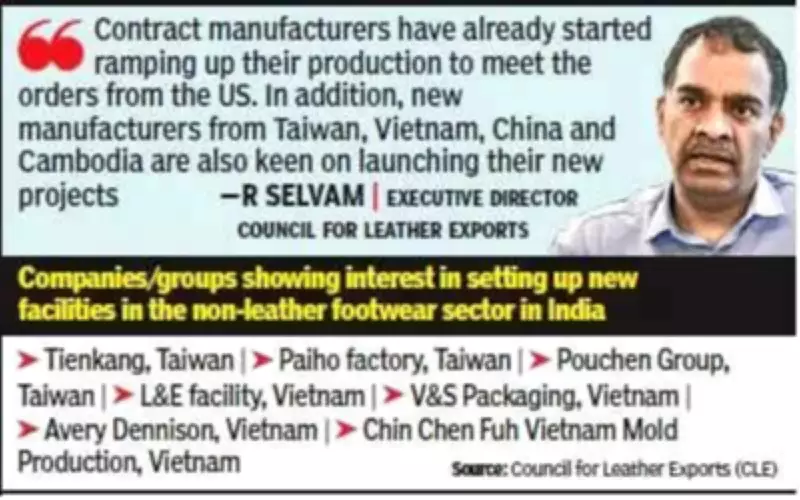
Several investment proposals that had significantly slowed over the past year are now regaining substantial traction. These delays were primarily caused by the high tariffs imposed on Indian exports by former US President Donald Trump's administration. According to industry sources, close to a dozen overseas companies are currently exploring the establishment of new manufacturing units within India.
"This includes prominent companies such as Taiwan-based Tienkang and Paiho, along with Vietnam-based Chin Chen Fuh Vietnam Mold Manufacturing," stated R. Selvam, the Executive Director of the Council for Leather Exports. He emphasized that contract manufacturers have already begun ramping up their production capacities to meet a surge in renewed orders from the United States.

Global Brands and Manufacturers Re-evaluate India Strategy
Numerous firms from Taiwan, Vietnam, China, and Cambodia that had previously deferred their India investment plans are now expressing keen interest in launching their projects. This shift is largely driven by the improved export visibility to the United States, which remains the world's largest footwear market.
Major global athletic and footwear brands with significant exposure to the US market—including industry giants like Nike, Adidas, Crocs, Puma, Skechers, and Asics—already manufacture footwear in India for export purposes. Many of these brands are now actively evaluating capacity expansion strategies in light of the recent tariff revisions.
Industry Leaders Express Optimism and Strategic Shifts
Rafiq Ahmed, Chairman of Kothari Industrial Corporation—a leading non-leather footwear manufacturer that produces Crocs-branded footwear—provided insight into the market dynamics. "The US had been our largest market before the tariff hikes last year severely disrupted our shipments," Ahmed explained.
He detailed the company's strategic pivot, stating, "Following the tariff impact, we diversified our export focus into alternative markets such as South Korea, Europe, and Canada. However, with the recent tariff revisions leading to a clear revival in US orders, we are now strategically refocusing our efforts on the American market." Ahmed added that global contract manufacturers are accelerating their partnerships with Indian firms to establish new production facilities, spurred by the rising demand.
Enhanced Supply Chain Ecosystem and Broader Investment
Echoing this sentiment of optimism, Israr Ahmed, Managing Director of Farida Group, highlighted his company's existing operations. Farida Group has been manufacturing New Balance shoes in Tamil Nadu through a joint venture with a Taiwan-based contract manufacturer.
"The influx of more new companies coming to India will significantly enhance our overall supply chain ecosystem within the non-leather footwear segment," he noted, anticipating positive ripple effects.
The proposed wave of investments is expected to extend far beyond basic footwear assembly. Industry analysts predict these moves will help create a much broader and more robust manufacturing ecosystem. This expansion is likely to cover ancillary industries such as specialized machinery production, shoelace manufacturing, webbing supplies, and advanced packaging solutions, thereby strengthening India's position in the global footwear supply chain.






