

US Stocks Decline Amid Renewed Trade Tensions as Trump Raises Tariffs
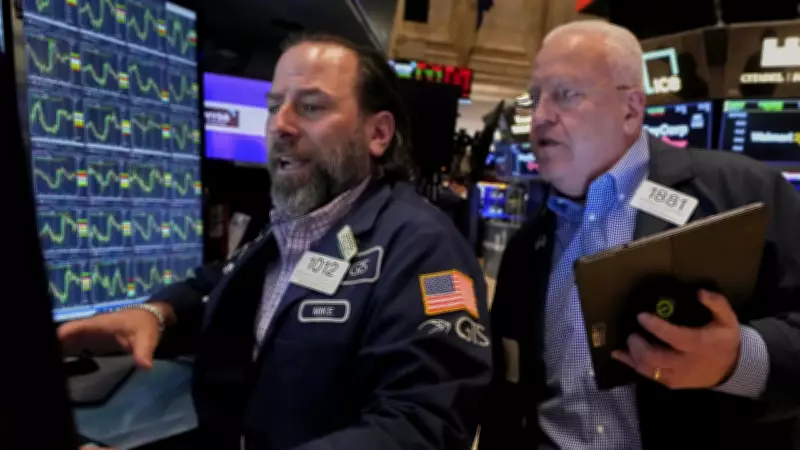
US stocks moved lower in morning trading as investors reacted to President Donald Trump's decision to increase global tariffs, though market swings remained far milder than the sharp volatility witnessed during last year's tariff-driven sell-off. The S&P 500 declined 0.7%, while the Dow Jones Industrial Average dropped 618 points, or 1.2%, and the Nasdaq Composite slipped 0.7% as Wall Street assessed the implications of renewed trade tensions, according to AP reports.
Tariff Increase Sparks Market Uncertainty
The market weakness followed Trump's announcement that temporary global tariffs would be raised to 15%, up from the 10% rate unveiled earlier after the US Supreme Court struck down sweeping "reciprocal" tariffs imposed under emergency powers. This move underscored continuing uncertainty over the direction of US trade policy, with investors remaining cautious as the administration signaled it could explore alternative legal routes to impose more permanent tariffs.
Global trading partners expressed concern about the developments, with South Korea's trade minister Kim Jung-kwan warning that uncertainty could intensify if new duties were introduced through other laws. Despite the decline, market reactions were relatively contained compared with the sharp turmoil seen when Trump first announced wide-ranging tariffs last year, suggesting investors expect prolonged negotiations and legal battles before clarity emerges.

Market Analysis and Expert Commentary
"Stocks got a boost Friday from the Supreme Court's tariff ruling, but it quickly became clear that the decision was simply going to open a new chapter in the trade saga, not end it," said Chris Larkin, managing director of trading and investing at E-Trade from Morgan Stanley, as quoted by AP. The United States intends to honor existing trade agreements and expects partners to do the same, US Trade Representative Jamieson Greer said in a CBS News interview, attempting to provide some reassurance amid the uncertainty.
Sectoral Performance and Market Movements
Across different sectors, airline stocks declined significantly after severe weather disrupted travel across the US Northeast. United Airlines fell 4.7%, American Airlines dropped 4.3%, and Delta Air Lines lost 4.1% as travel disruptions impacted operations and revenue projections.
Healthcare stocks saw sharp divergence with Novo Nordisk's US-listed shares tumbling 15.1% following trial results showing lower-than-expected weight loss for its CagriSema drug, while rival Eli Lilly gained 3.4% as investors shifted positions between the competing pharmaceutical companies.
In positive developments, Domino's Pizza rose 3.2% after reporting strong same-store sales and projecting further market-share expansion in 2026, demonstrating resilience in the consumer sector despite broader market concerns.
Global Market Trends and Currency Movements
Global markets showed mixed trends in response to the US tariff developments. Germany's DAX slipped 0.6%, while France's CAC 40 edged up 0.1%. In Asia, Hong Kong's Hang Seng climbed 2.5% and South Korea's Kospi rose 0.6%, while markets in Japan and mainland China remained closed for holidays, limiting regional reactions.
Across asset classes, the US dollar edged lower against major currencies, while gold prices advanced as investors sought safer assets amid policy uncertainty. Bitcoin briefly fell below $65,000 before recovering above $66,000, showing volatility in cryptocurrency markets as well.
Bond Market Developments and Federal Reserve Outlook
In bond markets, the yield on the 10-year US Treasury eased to 4.05% from 4.08% late Friday, reflecting some flight to safety amid the trade uncertainty. Meanwhile, Federal Reserve Governor Christopher Waller indicated the central bank could skip a rate cut at its next meeting following strong job gains, marking a shift from his earlier stance supporting easier policy.

The combination of trade policy uncertainty and shifting monetary policy expectations created a complex environment for investors, with market participants weighing multiple factors simultaneously. While the immediate market reaction to the tariff increase was negative, the relatively contained nature of the decline suggests investors have become somewhat accustomed to trade-related volatility and are anticipating extended negotiations rather than immediate resolution.





