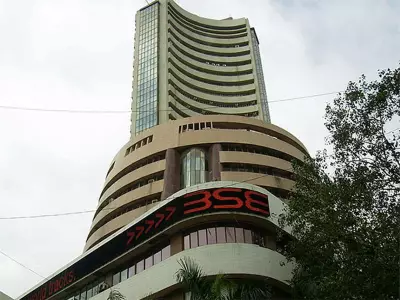
Market Veteran Shankar Sharma Cautions Investors About Moderate Returns
Ace investor and market veteran Shankar Sharma has advised investors to maintain moderate return expectations from the Indian stock market over the medium term, even as the long-term outlook remains fundamentally strong. Sharma's comments come amid recent market volatility following the announcement of a significant India-US trade agreement.
Market Reaction to India-US Trade Deal
The domestic stock market experienced sharp movements this week as news of the finalized India-US trade deal emerged. On Tuesday, market benchmarks surged dramatically with the Sensex and Nifty 50 both climbing approximately 2.5% in response to the positive development. However, this rally proved short-lived as market enthusiasm faded by Wednesday, with indices ending nearly flat.
Sharma explained this market behavior by pointing to lingering uncertainties surrounding the trade agreement. "The India-US trade deal is undoubtedly a positive development for bilateral relations and economic cooperation," Sharma told Mint. "However, significant uncertainty persists regarding the specific details and implementation of this agreement. This lack of clarity is keeping market participants cautious and preventing sustained momentum."

Trump's Unpredictable Policies Remain Key Concern
Sharma highlighted another critical factor influencing market sentiment: the unpredictable trade policies of US President Donald Trump. The veteran investor noted that Trump's history of sudden policy reversals creates substantial uncertainty for global markets, including India's.
"President Trump has demonstrated considerable unpredictability in his approach to international trade," Sharma observed. "We have witnessed similar patterns in his dealings with South Korea and European nations, where policy positions have shifted unexpectedly. This volatility represents a significant overhang for market performance and could potentially limit upside momentum in the coming months."
Details of the India-US Trade Agreement
The recently finalized trade deal between India and the United States represents a substantial reduction in trade barriers. Under the agreement, US tariffs on Indian goods will decrease significantly from 50% to just 18%. Economic experts view this development as particularly beneficial for several key Indian sectors that stand to gain improved market access.
- Textiles: Expected to benefit from reduced tariffs and increased export opportunities
- Seafood: Enhanced access to American markets with lower trade barriers
- Chemicals: Improved competitiveness in international markets
- Auto Ancillaries: Potential for increased component exports
- Pharmaceuticals: Better market access for Indian drug manufacturers
Aging Bull Market Lacks Fresh Triggers
According to Sharma, the Indian stock market faces additional challenges beyond international trade dynamics. He characterized the current market phase as an "aging bull market" that lacks fresh catalysts to drive sustained growth.
"The Indian equity market has enjoyed an extended bullish phase, but we currently face a shortage of new triggers to propel further expansion," Sharma explained. "Nominal GDP indicators have shown weakness recently, suggesting that corporate earnings may remain subdued in the near term. Given these conditions, investors would be prudent to maintain moderate return expectations over the medium horizon."
Economic Context and Projections
The Economic Survey for 2025-26, presented on January 29, projects that the Indian economy remains on stable footing despite global uncertainties. The survey forecasts real GDP growth in the range of 6.8% to 7.2% for FY27, indicating continued economic resilience.

However, Sharma emphasized that stock market performance doesn't always directly correlate with broader economic growth, especially when valuations are elevated and earnings growth appears constrained. The market veteran's cautious outlook suggests that while the India-US trade deal represents a structural positive, immediate market gains may be tempered by multiple factors including policy uncertainty, valuation concerns, and the absence of fresh growth catalysts.
Investors should note that market conditions can change rapidly, and individual circumstances vary significantly. Professional financial advice tailored to specific investment goals and risk profiles remains essential for making informed investment decisions in dynamic market environments.