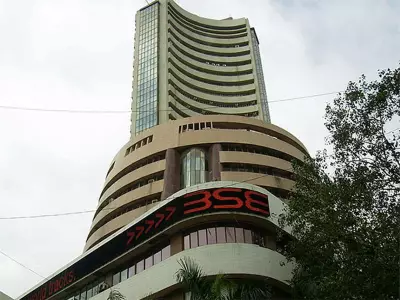
Indian equity markets snapped their six-session winning streak on November 18, 2025, as both benchmark indices closed in negative territory amid profit-taking and weak global cues. The decline was primarily driven by significant selling pressure in metal and financial stocks.
Market Performance and Key Levels
The Sensex concluded trading at 84,673, while the Nifty 50 settled at 25,910, reflecting a decline of approximately 278 points. This downward movement ended a consistent period of gains that had characterized market activity over the previous six sessions.
According to Rupak De, Senior Technical Analyst at LKP Securities, the Nifty 50 has been trading within a constrained 150-point range for two consecutive days, indicating consolidation. "A bearish engulfing pattern has emerged on the daily chart, suggesting a potential pause in the current price increase," De noted.

Technical indicators revealed concerning signals for short-term momentum. "The hourly RSI has shown a bearish crossover, and the index has established a lower top on the hourly chart, signaling an initial weakening of the trend," De explained. He identified immediate support at 25,850, with a breach potentially triggering further corrections toward 25,700. Resistance is positioned between 26,000 and 26,050.
Economic Concerns and Global Factors
The market downturn coincided with concerning economic data released in October. India's merchandise trade deficit expanded to an unprecedented USD 41.68 billion, largely attributed to increased gold imports and a significant drop in exports. This development has raised alarms about the nation's external fiscal situation.
Vinod Nair, Head of Research at Geojit Investments, attributed the domestic equity market's decline to profit-taking following the recent rebound, reflecting weak global sentiment. "The outlook for a U.S. Fed rate cut in December has weakened, impacting sentiment, with declines seen in IT, metal, and real estate stocks alongside a stronger dollar," Nair stated.
Private banking stocks provided some support during the session, cushioning the overall decline. Market participants are now closely monitoring upcoming US jobs data, which could significantly influence the Federal Reserve's policy direction.
Expert Insights and Future Outlook
Abhinav Tiwari, Research Analyst at Bonanza, indicated that markets may experience continued volatility as global challenges and economic uncertainties persist. Investors are advised to monitor upcoming global economic indicators and signals from ongoing trade negotiations between India and the United States for directional cues.
Nair added that "advancements on the Indo-US trade agreement and an improving domestic earnings forecast could help restore confidence and bolster market momentum enough to surpass the Nifty 50 level of 26,000."
Technical Analysis and Trading Strategy
Market experts provided detailed technical analysis and specific stock recommendations for traders:
Arvind Ltd
Sumeet Bagadia, Executive Director at Choice Broking, recommends buying Arvind shares at ₹346 with a stop loss at ₹333 and target price of ₹370. The stock has shown strong bullish momentum, closing near the day's high with a 3.37% gain.
Shiju Koothupalakkal, Senior Manager of Technical Research at Prabhudas Lilladher, also recommends buying Arvind at ₹346 with a target of ₹360 and stop loss at ₹338.
Other Stock Recommendations
Gokul Agro Resources Ltd: Bagadia suggests buying at ₹211 with stop loss at ₹203 and target of ₹226.
Central Depository Services Ltd (CDSL): Ganesh Dongre recommends buying at ₹1,605 with stop loss at ₹1,590 and target of ₹1,645.
KFin Technologies Ltd: Dongre suggests buying at ₹1,090 with stop loss at ₹1,065 and target of ₹1,125.
NTPC Ltd: Dongre recommends buying at ₹328 with stop loss at ₹320 and target of ₹345.
GMR Power and Urban Infra Ltd: Koothupalakkal suggests buying at ₹131.50 with target of ₹140 and stop loss at ₹128.

Thomas Cook (India) Ltd: Koothupalakkal recommends buying at ₹157.80 with target of ₹168 and stop loss at ₹154.
Market analysts emphasize that these recommendations represent individual expert opinions and investors should consult certified professionals before making investment decisions.