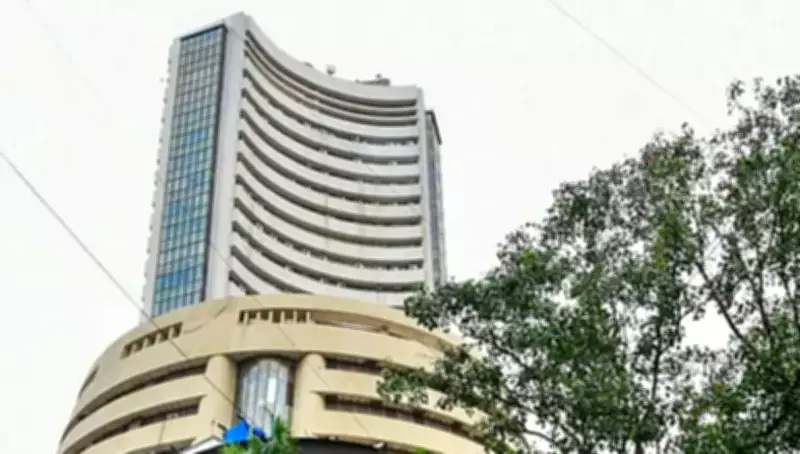
Indian Stock Markets Open Mixed Amid Global Tensions
The Indian stock market commenced trading on Monday with a mixed performance, reflecting investor caution in the face of rising geopolitical risks. The benchmark indices showed divergent trends as global uncertainties weighed on sentiment.
Market Performance at Opening Bell
At the opening bell, the BSE Sensex gained 139 points, demonstrating some resilience among large-cap stocks. Meanwhile, the NSE Nifty remained largely flat, hovering near previous closing levels. This split performance indicates selective buying in specific sectors while broader market participation remained subdued.
The market opening followed a weekend of heightened tensions between the United States and Iran, which has created volatility in global financial markets. Indian investors appeared to be balancing domestic economic factors against international developments.

Oil Price Surge Impacts Market Sentiment
The primary factor influencing market sentiment was the sharp rise in global crude oil prices. Brent crude futures climbed significantly as geopolitical tensions in the Middle East intensified. This development has direct implications for India's economy, which imports over 80% of its crude oil requirements.
Higher oil prices typically increase India's import bill, putting pressure on the current account deficit and potentially fueling inflation. Market participants were closely monitoring these developments, which contributed to the cautious trading approach evident in Monday's opening session.
Sectoral Performance and Key Drivers
Analysis of sectoral indices revealed varied performance across different segments of the market:
- Energy stocks showed mixed reactions to the oil price surge
- Banking and financial services exhibited moderate gains
- Information technology stocks faced some pressure
- Automobile companies showed cautious trading patterns
The market breadth was relatively balanced, with nearly equal numbers of advancing and declining stocks. This suggests that while some investors were taking advantage of buying opportunities, others remained on the sidelines awaiting clearer signals.
Global Context and Future Outlook
The US-Iran standoff has created uncertainty across global financial markets. As two significant players in the Middle East, any escalation between these nations typically triggers risk aversion among international investors. For Indian markets, this translates to:
- Increased volatility in currency markets
- Potential foreign institutional investor outflows
- Higher input costs for oil-dependent industries
- Possible impact on corporate earnings projections
Market analysts suggest that while domestic fundamentals remain reasonably strong, external factors like geopolitical tensions and oil price movements will likely dominate short-term trading patterns. Investors are advised to maintain a balanced portfolio approach and monitor developments in the Middle East closely.
The Reserve Bank of India's monetary policy stance and government measures to cushion the impact of higher oil prices will also play crucial roles in determining market direction in the coming sessions.