

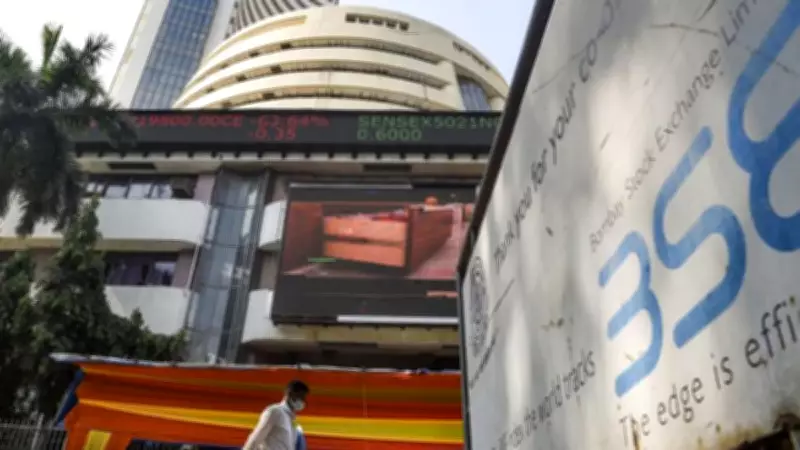
Sensex Plunges 1,600 Points as West Asia Conflict Enters Fifth Week
The Indian stock market experienced a significant downturn on Monday, with the benchmark Sensex plummeting by over 1,600 points. This sharp decline comes as the ongoing conflict in West Asia enters its fifth week, heightening geopolitical uncertainties and rattling investor confidence globally.
Market Performance Details
The Sensex, which tracks 30 of India's largest and most actively traded stocks on the Bombay Stock Exchange, closed at a lower level, reflecting widespread selling pressure across sectors. The broader Nifty 50 index also mirrored this trend, dropping substantially in tandem with the Sensex. Key sectors such as banking, energy, and information technology were among the hardest hit, with major companies seeing notable declines in their share prices.
Analysts attribute this market crash to escalating tensions in West Asia, where the conflict has now persisted for over a month. The prolonged warfare has raised concerns about potential disruptions to global oil supplies, inflationary pressures, and overall economic stability, which in turn have spooked investors in emerging markets like India.

Impact of Geopolitical Tensions
The West Asia conflict, now in its fifth week, has introduced a high degree of volatility into financial markets worldwide. Investors are increasingly risk-averse, opting to move their funds to safer assets such as gold and government bonds, leading to a sell-off in equities. This shift in sentiment is particularly pronounced in India, where foreign institutional investors have been net sellers, exacerbating the market decline.
Furthermore, the conflict has implications for India's economy, given the country's reliance on oil imports from the region. Any sustained increase in crude oil prices due to supply chain disruptions could fuel inflation and strain the current account deficit, adding to the market's woes.
Investor Sentiment and Future Outlook
Market experts suggest that the current downturn is a reflection of broader geopolitical risks rather than domestic economic factors. Investor sentiment remains fragile, with many adopting a wait-and-watch approach until there is more clarity on the resolution of the West Asia conflict. In the short term, volatility is expected to persist, with potential for further corrections if tensions escalate.
However, some analysts point out that this could present buying opportunities for long-term investors, as market corrections often lead to undervalued stocks. They advise caution and recommend focusing on fundamentally strong companies with robust growth prospects.
In summary, the Sensex's plunge of 1,600 points underscores the significant impact of the West Asia conflict on global financial markets, highlighting the interconnectedness of geopolitical events and economic performance. As the situation develops, market participants will be closely monitoring updates for any signs of de-escalation or further instability.






