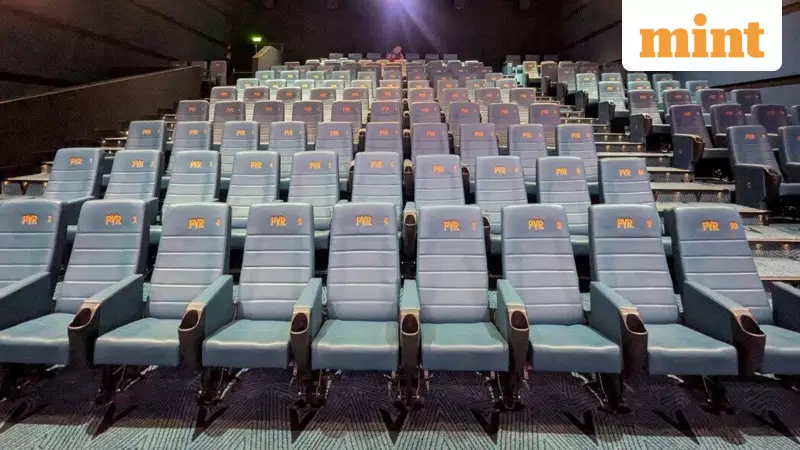
The December quarter, traditionally a robust period for multiplexes, is shaping up well for PVR Inox Ltd. The third quarter of fiscal year 2026 (Q3FY26) is receiving a significant boost from the blockbuster performance of the Bollywood film Dhurandhar and the anticipated release of the Hollywood sequel Avatar: Fire and Ash. However, the long-term trajectory of the company's stock remains tethered to the unpredictable nature of content quality and consistency, factors largely beyond its direct control.
Blockbuster Line-Up Drives Quarterly Optimism
The festive season has delivered a powerful one-two punch for PVR Inox's occupancy rates. The multi-starrer Hindi film Dhurandhar has already amassed impressive box office collections exceeding ₹400 crore nationwide. Adding to this momentum is the global release of Avatar: Fire and Ash on December 19. Expectations are sky-high, given that the previous installment, Avatar: The Way of Water, collected over ₹300 crore in the Indian market.
This quarter also saw successful releases like Thamma, De De Pyaar De 2, and Kantara 2, which contributed to higher footfalls. Reflecting this improved performance, occupancy rates climbed to 25.7% in Q2FY26 from 22% in Q1. Analyst Jinesh Joshi of PL Capital provided a conservative estimate, stating, "Assuming industry-wide box office collections settle at ₹3,000 crore and PVR Inox’s market share is 30%, we arrive at a net box office collection (NBOC) figure of ₹900 crore for Q3FY26." He further pencilled in a revenue projection of ₹1,800 crore for PVR in Q3FY26, which would be close to its post-pandemic high of ₹1,823 crore recorded in Q2.

The Persistent Challenge of Content Volatility
Despite the promising quarterly outlook, PVR Inox's shares have struggled in 2025, declining by 20% and underperforming the broader Nifty 500 index. This divergence highlights a core issue for exhibitors. "Content volatility has magnified for PVR post pandemic, leading to erratic quarterly performance, keeping the stock under pressure," explained Joshi. While the pipeline for the fourth quarter (Q4FY26) includes major titles like The Raja Saab, Border 2, Toxic, and Dhurandhar Part 2, their ultimate success is not guaranteed.
The company's earnings upgrades are critically dependent on sustaining occupancy trends, which in turn rely on a steady stream of high-quality films. This inherent uncertainty is a significant overhang for investors. Furthermore, PVR Inox continues to face stiff competition from over-the-top (OTT) platforms, which vie for audience attention and can shorten theatrical windows.
OTT and Hollywood Deal Risks Loom Large
A specific concern for investors is the potential impact of the Netflix-Warner Bros. Discovery (WBD) deal. A report from Elara Securities (India) dated December 11 cautioned that Netflix's potential strategy to shorten theatrical windows or experiment with OTT-first releases could materially affect exhibitors' profits. "For India exhibitors, Hollywood contributes 15-20% of gross box office collection, with WBD at around 4%; Netflix’s ability to shorten windows or test OTT-first launches could meaningfully drag Ebitda," the report noted.
Elara outlined a worst-case scenario where a 4% revenue impact on PVR Inox from such changes could drag its Ebitda down by 6% in the fiscal year 2028. In response to these industry headwinds, PVR Inox is adhering to a capex-light expansion strategy and focusing on screen rationalization to optimize its network.
In summary, while Dhurandhar and Avatar: Fire and Ash are set to deliver a strong Q3FY26 for PVR Inox, the company's journey beyond this quarter is fraught with challenges. The dual pressures of content inconsistency and evolving OTT dynamics will continue to test the resilience of India's largest multiplex chain, making consistent box office success more crucial than ever for investor confidence.