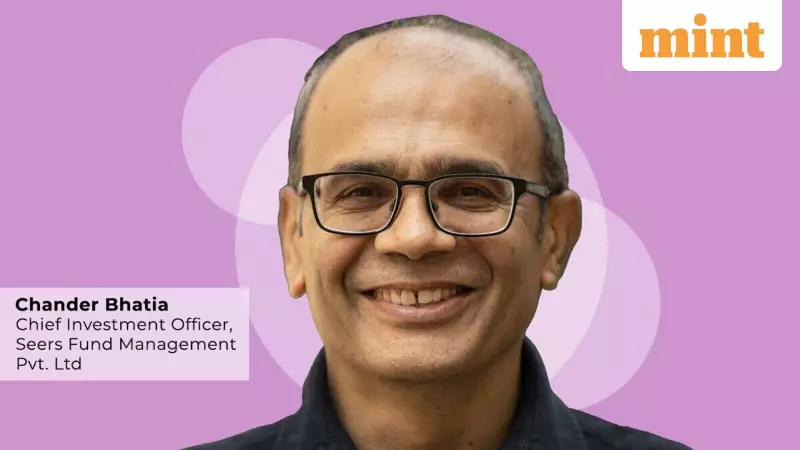
In an exclusive outlook for the Indian equity markets, Chander Bhatia, Chief Investment Officer at Seers Fund Management Private Limited, has projected robust growth for stocks over the next three to four years. Bhatia anticipates large-cap stocks to deliver a compound annual growth rate (CAGR) of 10–11%, while mid-cap and small-cap segments could outpace them with a growth of 13–15% CAGR during the same period. He attributes this optimistic forecast to strong domestic fundamentals and expects the market to resume its upward journey, potentially hitting new highs in the current financial year.
Market Consolidation Phase Ending, New Highs Expected
Bhatia assessed that the Indian market has been in a consolidation phase for the past 15 months, which has effectively removed excess froth from the system. He pointed to positive steps taken by the government and the Reserve Bank of India (RBI), such as rationalizing GST, maintaining a benign monetary policy, and increasing income tax limits, as key drivers for reviving consumer sentiment and encouraging industrial investment. "The market looks interesting and is most likely heading for a new high in the current financial year," he stated.
Reflecting on the recent past, Bhatia noted that the COVID-19 panic in March 2020 created a sharp market bottom, followed by a significant four-year rally until September 2024. This period saw mid-caps and small-caps performing exceptionally well, attracting a massive influx of new investors. The number of unique investors skyrocketed from about 3.1 crore pre-pandemic to over 12 crore recently. The subsequent correction, particularly steep in the smaller segments, was a necessary consolidation, which he believes is either complete or nearing completion.

Rupee Depreciation and Structural Growth Narrative
Addressing the Indian rupee's record lows, Bhatia expressed surprise at its 5.1% depreciation against the US dollar in the current fiscal year. He cited US tariffs, volatile geopolitics, and high gold imports as contributing factors. However, he remains confident in the economy's fundamentals, underpinned by high GDP growth, lower inflation, and robust FDI inflows. Highlighting commitments from global giants, he mentioned that Amazon, Google, and Microsoft plan combined investments worth $70 billion.
"The worst for the currency appears to be over," Bhatia asserted, predicting a phase of consolidation or even some appreciation in the coming months. On the economy, he dismissed notions of weakening growth momentum, emphasizing multiple structural positive factors for India. His model assumes real GDP growth of 6.5–7.5%, inflation in the 3–5% range, and nominal GDP growth of 10–11% in the coming years.
Identifying Value and the Stock Selection Process
The recent market correction has brought valuations in several sectors to reasonable levels, according to Bhatia. He sees emerging value in specific themes and industries:
- Capital Markets Theme: Companies offering brokerage, wealth management, and AMC services represent a "decadal opportunity."
- Other Attractive Sectors: Select real estate stocks, auto-ancillary companies, the cooling industry, specific pharma stocks, and capital goods companies.
- NBFCs: While his fund was bullish on NBFCs two years ago (with a picked stock tripling), he remains reasonably positive on the sector.
Explaining his investment philosophy, Bhatia detailed a robust process combining top-down and bottom-up approaches. The most critical factor is the quality of promoters and management. His team looks for sectors with a long growth runway and quality companies available at reasonable prices. Key criteria include promoters having skin in the game, no share pledging, robust balance sheets, reasonable PEG ratios, healthy sector outlooks, and company growth rates expected to outpace nominal GDP. As long-only investors, they seek entry points at a discount to fair value and continuously monitor portfolio companies and their competitive landscapes.

Bhatia concluded by reaffirming his positive long-term view, stating that the overall direction of the Indian stock market should remain positive due to the country's strong structural growth factors, despite non-linear journeys and intermittent corrections.