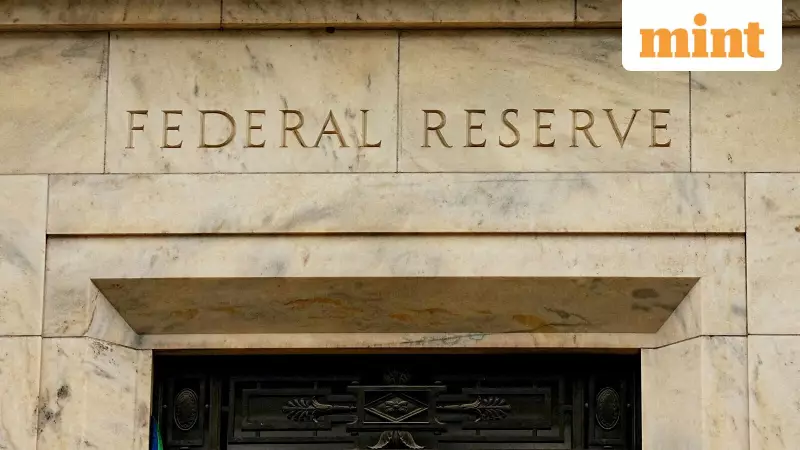
As the new year approaches, the bond market is exhibiting a cautious calm after a period of volatility, with its trajectory for 2026 heavily dependent on Federal Reserve independence and persistent inflation. Strategists anticipate that yields will largely remain within the established range of 2025, unless disrupted by a significant economic or geopolitical shock.
Yield Expectations and Economic Drivers
The benchmark 10-year Treasury yield was recorded at 4.16% on a recent Monday. Throughout 2025, it swung between a high of 4.8% in January and a low of approximately 3.95% in October. Investment giant Pimco forecasts the 10-year yield to oscillate between 3.75% and 4.75% in 2026. This benchmark is crucial as it directly influences lending rates across the economy, including for home mortgages, and is a key indicator monitored by equity investors.
Tony Crescenzi, Executive Vice President and Portfolio Manager at Pimco, describes the outlook as "a tale of two halves." He anticipates initial softness in the labor market, followed by an economic uplift. A significant stimulus could come from tax-law changes enacted in July's One Big Beautiful Bill, potentially putting $200 billion in additional refunds into taxpayers' hands early in the year.

The Crucial Test of Federal Reserve Independence
A primary source of anxiety in 2025 was policy uncertainty, particularly surrounding the leadership of the U.S. Federal Reserve. President Donald Trump, who has criticized current Chair Jerome Powell for slow rate cuts, is expected to announce a replacement in January, with Powell's term concluding in May.
The market's core concern is any political meddling that could undermine the Fed's operational independence. "We wouldn't completely toss aside the issue, but the chances seem to be pretty high that the Fed's independence will be protected," noted Crescenzi. Jim Caron of Morgan Stanley Investment Management echoed a preference for stability, stating, "The thing is that boring is beautiful to bonds…I'll take it."
This issue will face a direct legal test. The Supreme Court is set to hear arguments on January 21 regarding President Trump's attempt to fire Fed Governor Lisa Cook over mortgage-fraud allegations, which she denies. The ruling on whether a president needs cause to dismiss a Fed governor could trigger market turmoil if it grants excessive executive power.
Inflation, Tariffs, and Debt: Lingering Concerns
While immediate tariff fears have subsided since the market-jolting "Liberation Day" announcement in April, a pending Supreme Court ruling on Trump's use of emergency powers for tariffs remains a watchpoint. Although not expected to uphold the action, the administration has signaled alternative paths, keeping the topic alive.
Inflation data has provided some comfort, with the November Consumer Price Index at 2.7%, below expectations. However, strategists warn that inflation may prove sticky, hovering around 3% in 2026. Another long-term worry is the U.S. debt level, now near 100% of GDP. For now, this concern is on the backburner. John Briggs of Natixis explains that during a rate-cutting cycle with falling yield potential, debt is less of an immediate issue, though this could change later in the year.
Briggs expects the Fed to implement three more quarter-point rate cuts before pausing. His view suggests the 10-year yield could find a low around 4.15%—close to current levels—but may end 2026 nearer to 4.6%, especially if inflation remains persistent and eliminates the potential for further easing.