

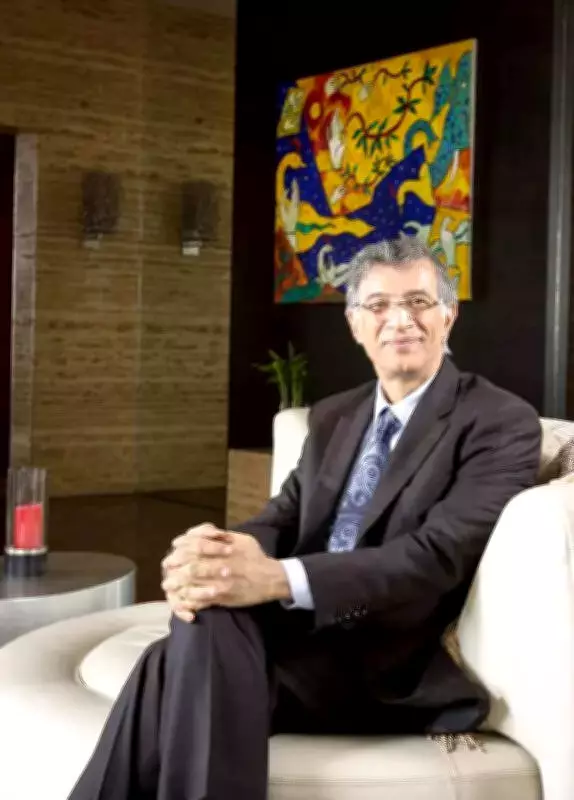
NAREDCO Chairman Flags Critical Delays in Madhya Pradesh Urban Development
Indore: Delays in implementing urban development policies are significantly hampering economic growth and discouraging private investment in Madhya Pradesh, according to Dr Niranjan Hiranandani, Chairman of the National Real Estate Development Council (NAREDCO). During an interaction in Indore on Friday, Hiranandani highlighted substantial gaps in master planning and stamp duty structures that are creating uncertainty for investors.
Policy Implementation Lag Creates Investment Uncertainty
"If you pass policies but execute them late, development will be delayed and investment will be discouraged," Hiranandani stated emphatically. He explained that uncertainty in planning frameworks directly impacts capital flows into real estate and infrastructure projects, creating a ripple effect throughout the economy.
The NAREDCO chairman pointed to specific examples of planning delays: Bhopal's Development Plan period ended in 2005, and a revised plan is still awaited nearly two decades later. Meanwhile, Indore's master plan expired in 2021 without an updated version.

"There is a significant lacuna here," Hiranandani noted. "Indore does not have an updated plan for the last five years, and Bhopal's is delayed by nearly eighteen years. If policies are implemented late, development will inevitably be delayed. Policies should be implemented on time if you want investment, employment generation, and sustainable growth."
Contrast with Maharashtra's Proactive Approach
Drawing a sharp comparison with neighboring Maharashtra, Hiranandani highlighted how cities such as Mumbai and Pune have maintained updated Development Control and Regulation frameworks. "Every city in Maharashtra has a DCR that is updated regularly. In Mumbai specifically, policies like Transferable Development Rights, slum redevelopment initiatives, and commercial development under programs such as Mumbai 3.0 have helped attract nearly two hundred new developers in the last three years from Delhi, Madhya Pradesh, Bengaluru, and Chennai."
He stressed that timely execution, not merely policy announcements, determines investment momentum. "We should not fail because of lack of action. The policies are already there. Timely implementation will substantially help the state's economic prospects."
Stamp Duty Concerns and Taxation Challenges
On taxation matters, Hiranandani termed Madhya Pradesh's stamp duty rate of 12.5 percent as the highest in the country. "Paradoxically, you collect less revenue than many other states despite having the highest stamp duty. If Madhya Pradesh reduces it to around six percent, collections could potentially double because transaction volumes would increase significantly."
He connected this issue to national housing initiatives, noting that the Pradhan Mantri Awas Yojana mandates lower stamp duty to enable private sector participation. "How do you expect PM Awas Yojana to get a substantial boost in Madhya Pradesh when stamp duty is the highest in the country?" he questioned.
Urban Growth as National Economic Driver
Hiranandani emphasized that housing and land remain state subjects, and state governments play a decisive role in shaping urban growth trajectories. "Urban growth will drive India's overall economic growth. Employment generation can be multiplied only through the strategic expansion of Tier 1, Tier 2, and Tier 3 cities. States have to prioritize city master plans and provide regulatory clarity to attract sustainable investment."
On regulatory reforms, he acknowledged that the Real Estate Regulatory Authority (RERA) has benefited homebuyers significantly, though its implementation varies across states. "The law is fundamentally good. Some weaknesses may exist in implementation in certain states, but RERA has brought much-needed transparency to the sector."
Planning Constraints in Indore
The NAREDCO chairman also flagged specific planning constraints in Indore, noting that a maximum floor area ratio of 1:2 in the planning area restricts housing supply. "With rising land costs, low FAR limits housing supply and increases prices. This directly impacts affordability in a high-growth Tier-2 city like Indore, where demand continues to outpace available inventory."

In his concluding remarks, Hiranandani expressed measured concern: "I am concerned to see that a state which has tremendous potential to do so much is not doing enough. I am not saying Madhya Pradesh is not doing anything, but there is substantial scope to improve further in real estate development and urban planning frameworks."
The comments come at a time when urban infrastructure development has become central to India's economic growth strategy, with cities increasingly seen as engines of employment generation and innovation.





