

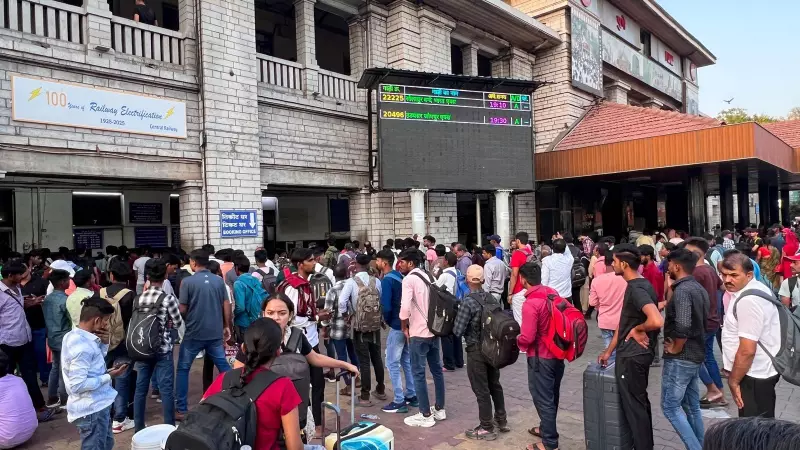
In a significant move to decongest one of Maharashtra's busiest rail hubs, the Indian Railways has embarked on a phased redevelopment of Pune railway station. The ambitious plan, which includes adding six new platforms and upgrading two nearby stations, aims to alleviate the severe travel stress experienced by nearly 1.74 lakh daily passengers. However, the project faces criticism from railway advocacy groups who allege it prioritises VIP convenience over addressing core passenger woes.
The Expansion Blueprint: New Platforms and Satellite Stations
The heart of the decongestion strategy lies in a major yard remodelling project at Pune station itself. Currently operating with six platforms, the station will see an addition of six more, effectively doubling its capacity. Railway officials have stated that work on this critical expansion is scheduled for completion by March 2027.
To systematically reduce pressure on the main hub, the Railways is simultaneously redeveloping Hadapsar and Khadki stations to handle additional train halts. "By developing Hadapsar and Khadki stations and operating special trains whenever the crowds increase, we are systematically reducing pressure on Pune station," explained Hemant Behera, spokesperson and Divisional Commercial Manager of the Pune Division. The plan involves shifting several train services to these satellite stations.

Enhanced Amenities and Crowd Management Measures
Alongside infrastructure expansion, authorities are implementing immediate measures for passenger safety and comfort. A key initiative is the creation of a temporary holding area at Pune station, equipped with fans, drinking water, and washroom facilities to manage crowds during peak periods.
Officials have also outlined a protocol for festive seasons, which includes deploying additional Railway Protection Force (RPF) personnel, special forces, and ticket-checking staff. Continuous monitoring is emphasised to prevent overcrowding and stampede-like situations. "Additional forces, holding areas and continuous monitoring are put in place during peak periods to avoid any stampede-like situation and ensure passenger safety and comfort," Behera added. Furthermore, washroom maintenance has been intensified under a contractual arrangement for daily cleaning.
Criticism from Advocacy Groups: "Prestige Over Passengers?"
Despite the outlined plans, the redevelopment project has not been met with universal approval. Harsha Shah, president of the Railway Pravasi Group, has voiced strong objections, arguing that the current approach is misguided. "If mega platforms like those in Delhi existed everywhere, one platform could dispatch three long trains, easing congestion and improving railway efficiency. There is no need for six new platforms or yard modelling," Shah stated.
The activist group accuses the project of being shaped more for administrative and VIP comfort than for the common passenger. "One platform is reserved for VIP. This means the railway infrastructure in Pune is being shaped to serve VIPs, not passengers," Shah alleged, highlighting that such reserved facilities lock away critical land from public use.
Shah further questioned the on-ground reality for travellers, pointing out the lack of basic shelter. "What world-class facilities are being provided?... Passengers bound for Bihar, UP, and Gujarat are made to sit for hours in the sun and rain." She also criticised the failure to relocate maintenance yards outside the city limits to places like Talegaon and Wadgaon, a model successfully followed in Delhi, to free up prime space for passenger amenities.
As the Pune division moves forward with its March 2027 deadline, the debate continues between the Railways' vision of systematic decongestion and activists' demand for a more passenger-centric, efficient use of infrastructure and land. The success of the project will ultimately be measured by how effectively it relieves the daily travel stress of the nearly two lakh passengers who pass through its gates.






