

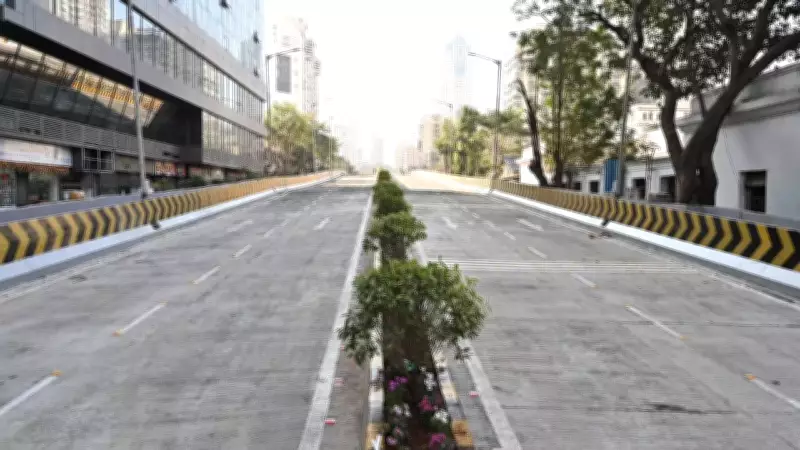
Mumbai's Bellasis Flyover Reopens Four Months Early After Record 15-Month Rebuild
The reconstructed Bellasis flyover in Mumbai has been officially opened to traffic, marking a significant achievement in urban infrastructure. The project was completed in a record-breaking 15 months and six days, finishing a full four months ahead of the original schedule. This early completion is expected to bring immediate relief to one of the city's busiest traffic corridors.
Renamed as Punyashlok Ahilyadevi Holkar Flyover
In a notable change, the newly rebuilt structure has been renamed the Punyashlok Ahilyadevi Holkar flyover. This renaming honors the historical figure while preserving the flyover's critical role in Mumbai's transportation network. The new identity reflects a blend of cultural significance and modern utility, maintaining its status as a key connector in the city's east-west axis.
Restoration of a Vital East-West Link
The flyover serves as a crucial east-west corridor, linking the areas of Mumbai Central, Nagpada, and Tardeo. Its reopening is anticipated to significantly ease traffic congestion and improve overall flow in the densely populated Mumbai Central region. Officials project that this will reduce travel times and enhance safety for daily commuters, addressing long-standing mobility challenges in south Mumbai.

Early Completion Through Meticulous Planning
Despite the tender allowing for a longer timeline, the reconstruction was finished four months early. Authorities have attributed this accelerated pace to rigorous planning and continuous, round-the-clock execution. The project team worked tirelessly to overcome logistical hurdles, ensuring that deadlines were met without compromising on quality or structural integrity.
Strict Monitoring Ensured Quality and Safety
The entire reconstruction process was conducted under close supervision, with continuous monitoring to uphold high standards of quality control and structural safety. This vigilant approach helped maintain adherence to timelines despite various constraints, such as limited space and ongoing traffic demands. The focus was on delivering a durable and reliable infrastructure asset that can withstand Mumbai's heavy vehicular loads.
Modern Design for Enhanced Durability
The rebuilt flyover incorporates upgraded structural components designed for improved durability and increased load-bearing capacity. These enhancements ensure safer and smoother travel for motorists, with features that cater to modern engineering standards. The design prioritizes long-term resilience, aiming to minimize future maintenance needs and disruptions.
Coordinated Efforts Led to Timely Success
The Brihanmumbai Municipal Corporation (BMC) has credited the project's success to strong coordination among multiple stakeholders. Key contributors included the BMC's bridges department, the Railways, local ward offices, and the traffic police. This collaborative effort facilitated smooth execution, enabling the early completion that has now benefited the public. The project stands as a model for efficient urban development in Mumbai.






