Mumbai's Orange Gate Tunnel Realigned to Girgaon, Construction to Begin Soon
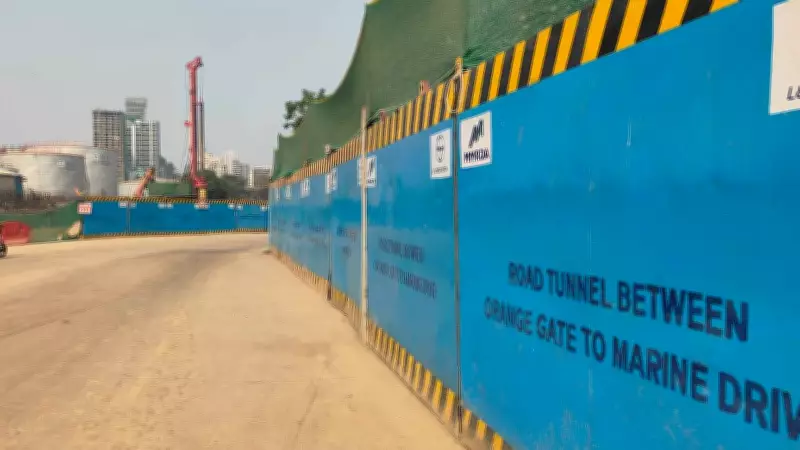
Mumbai's ambitious Rs 8,056-crore Orange Gate–Marine Drive tunnel project has undergone a significant realignment, with its endpoint now set at Girgaon's Jawahar Bal Bhavan instead of the originally planned Marine Drive location. This crucial change comes after safety concerns were raised by the Marine Drive Citizens Association, prompting the Mumbai Metropolitan Region Development Authority (MMRDA) to approve the revised alignment in early December.
Project Overview and Benefits
The Orange Gate tunnel is designed as a vital east–west connector in south Mumbai, aiming to dramatically reduce travel time between the city's eastern and western waterfronts. Currently, vehicles traveling from the Eastern Freeway to south Mumbai and the western coast must navigate through multiple traffic bottlenecks, including P D'Mello Road, railway crossings at Carnac (now Sindoor) Bridge, and the congested GPO junction. During peak hours, this approximately 5-kilometer stretch can take 25 to 30 minutes to traverse.
Once operational – with a target completion date of mid to end 2028 – the same journey through the tunnel is expected to take just about five minutes. The project will significantly improve access from the Eastern Freeway to south Mumbai, the Coastal Road, and areas further west. Given the substantial investment, the tunnel is likely to be tolled to help recover costs.

Revised Alignment Details
Under the revised plan approved by MMRDA, both eastbound and westbound tunnels will now enter and exit at Girgaon, marking a departure from the original design that called for separate entry and exit points. The westbound tunnel has been shortened while the eastbound tunnel has been lengthened, though officials note there will be little change in the overall project cost. The exact impact of these adjustments is still being calculated.
The tunnel's route will begin at Orange Gate on Mumbai's eastern waterfront and pass beneath:
- Congested residential neighborhoods
- Heritage structures
- The underground Aqua Metro line
Before surfacing near Jawahar Bal Bhavan in Girgaon, close to Charni Road station on Marine Drive. At its deepest point near Lamington Road, the tunnel will be approximately 47 metres below ground level. Including entry and exit ramps, the total length will be around 4 kilometers.
Construction Timeline and Progress
Construction giant Larsen & Toubro (L&T) has been awarded the contract for this massive infrastructure project. On December 3, Chief Minister Devendra Fadnavis inaugurated the tunnel boring machine (TBM) at Orange Gate, marking a significant milestone. According to MMRDA officials, the TBM has since been assembled and tunnelling work is expected to begin shortly.
A second TBM is scheduled to arrive later in 2026 to accelerate construction. The project has an official deadline of December 2028, with authorities working diligently to meet this target despite the recent alignment changes.
Official Perspective
Chief Minister Devendra Fadnavis emphasized the tunnel's importance during the TBM launch ceremony, stating: "While the Eastern Freeway allows citizens to reach South Mumbai from the eastern suburbs in 20–25 minutes, the subsequent traffic congestion adds another 30 to 45 minutes to the journey. Furthermore, residents of the western suburbs and South Mumbai have to take a long and arduous route to reach the new Navi Mumbai Airport. The Orange Gate tunnel was conceived as the solution to this problem."
This statement underscores the project's dual purpose: not only reducing travel time within Mumbai but also improving connectivity to the upcoming Navi Mumbai International Airport, which is expected to significantly ease air travel for the city's residents.
With major hurdles now cleared and construction set to begin, the Orange Gate tunnel project represents a transformative infrastructure development for India's financial capital, promising to reshape urban mobility in one of the world's most congested cities.