

Maharashtra Government to Introduce Private Property Registration Centers
The Maharashtra state government is set to roll out 60 new property registration offices across the state, which will be operated by private institutions. This initiative aims to streamline the registration process, enhance efficiency, and significantly cut down waiting times for citizens. However, this convenience will come at an additional cost to users, as confirmed by officials on Friday.
Phased Implementation and Operational Model
Modeled after the efficient passport service centers, these new facilities will function alongside the existing 517 government-run sub-registrar offices. The proposal, which received clearance from the revenue department last year, will be implemented in a phased manner to ensure smooth integration.
In the initial phase, five centers will be launched in key urban areas including Mumbai, Pune, Thane, and Nagpur. Abhay Mohite, Deputy Inspector General (IT) of the registration department, stated, "We expect to open them in the next six months. Tenders are being finalized to appoint the private institutions that will run these centers."

Under this model, the private agencies will provide the necessary infrastructure and support staff, while government officials will continue to oversee and execute the actual registration process. "All facilities will be provided by the private institution, but the registration work will be done by state government employees," Mohite clarified.
Additional Service Fee and Expansion Plans
These new centers are anticipated to charge an additional service fee of up to Rs 6,000 per document, over and above the standard government registration charges. Officials have directed the implementing agency to cap this facility charge at Rs 6,000, with the final fee structure to be officially notified once the agency is appointed.
The second phase of the rollout, expected within nine months of the first, will introduce 25 more centers in regions such as Mumbai suburban, Pune, Thane, Nashik, Nagpur, and Chhatrapati Sambhajinagar. The remaining 30 offices will be established in other districts during the third phase, primarily targeting areas with high volumes of property registrations.
Government Rationale and Public Criticism
Revenue Minister Chandrashekhar Bawankule had announced in September last year that these new centers would offer improved amenities and streamlined services, similar to those found in passport offices. The government's plan is focused on reducing overcrowding and enhancing service delivery in high-demand urban centers, while maintaining government control over the core registration process.
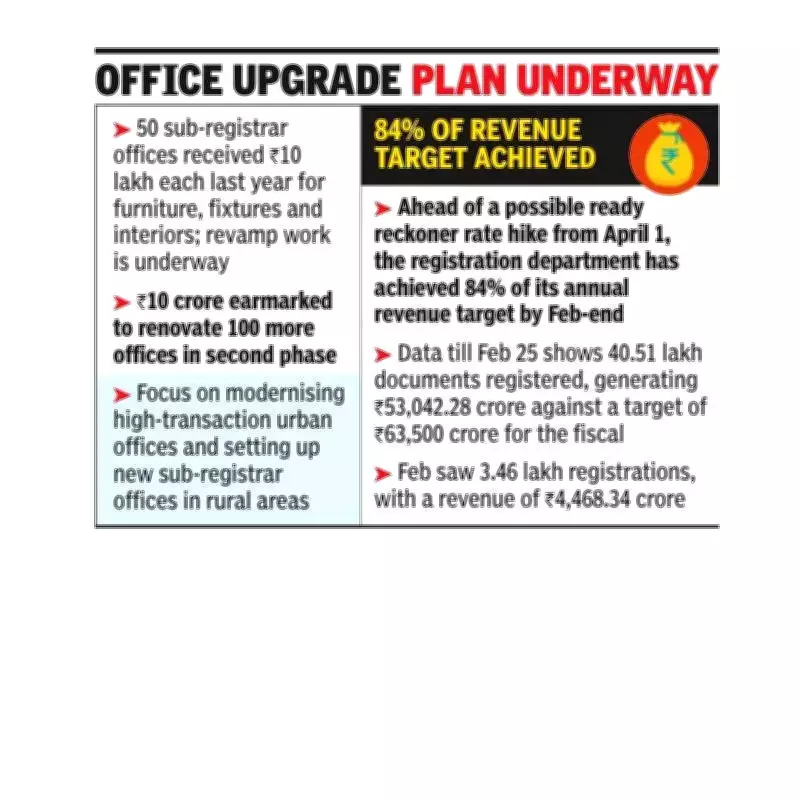
Despite these intentions, the proposal has faced criticism from citizen groups and activists, particularly in Pune. They argue that the existing government offices lack basic infrastructure, such as drinking water, adequate seating, and functional toilets. Activist S Joshi questioned the necessity of private centers, stating, "The government should first fix the basics. A limited number of private centers may help in some cases, but additional charges for core services are unfair."
Echoing these concerns, Ketaki Mohite, who recently registered a property in Pune, highlighted the poor conditions of current facilities. "Upgrading current facilities should be the priority before roping in private operators," she remarked.
Industry Perspectives and Future Outlook
Industry representatives have also expressed caution regarding the initiative. Sachin Shinghavi of the Association of Service Providers (Maharashtra) noted that while private centers might benefit those willing to pay extra for convenience, the department must not neglect the larger population that relies on government-run facilities.
As Maharashtra moves forward with this ambitious plan, the balance between improving efficiency through privatization and ensuring equitable access to essential services remains a critical point of discussion. The success of these new centers will largely depend on their ability to deliver on promises of reduced waiting times and enhanced service quality, without disproportionately burdening citizens with additional costs.






