

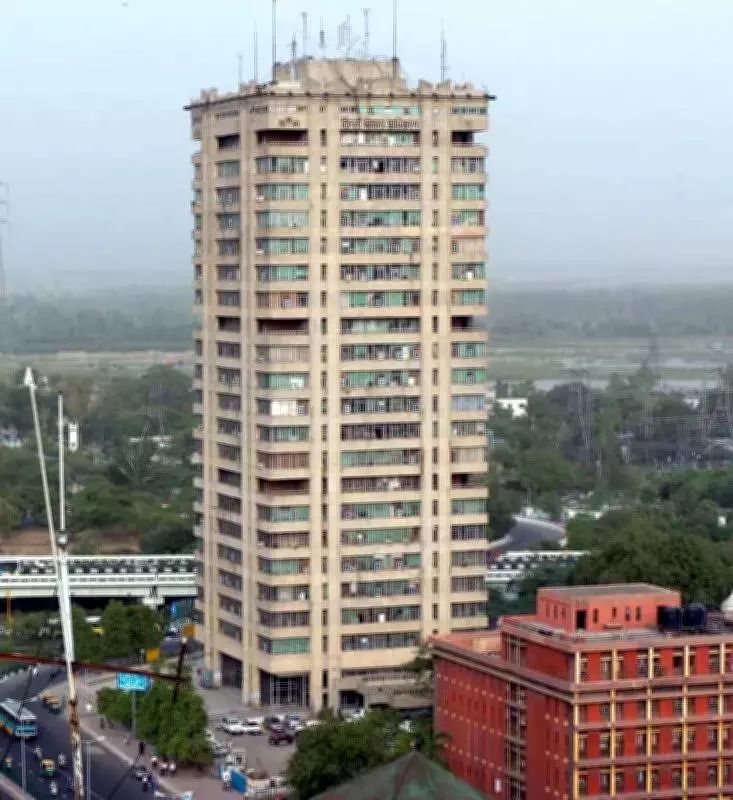
Delhi Development Authority Approves Major Revisions to Transit-Oriented Development Policy
In a significant move aimed at transforming urban development patterns, the Delhi Development Authority (DDA) has approved comprehensive revisions to the transit-oriented development (TOD) norms under the Master Plan for Delhi 2021. These changes will permit substantially greater building height and density for properties located near metro and Regional Rapid Transit System (RRTS) stations, marking a pivotal shift in the capital's urban planning approach.
Expanded Eligibility and Reduced Plot Size Requirements
The authority has substantially broadened the eligibility criteria for TOD benefits, bringing previously excluded areas into the fold. Under the modified provisions, properties situated within land pooling zones, low-density residential areas, and even unauthorised colonies can now qualify for enhanced development rights, provided they meet two key conditions: the plot must measure at least 2,000 square meters and be located within a 500-meter corridor of a metro station.
This represents a dramatic reduction from the previous minimum plot requirement of 10,000 square meters, potentially opening up development opportunities across numerous smaller parcels of land throughout the city. Officials emphasized that this change aims to encourage broader participation in transit-oriented development and create more compact, mixed-use neighborhoods around public transportation hubs.

Simplified Land-Use Conversion and Enhanced Floor Area Ratios
Under the revised framework, any qualifying plot will be designated as a 'TOD plot,' streamlining what was previously a complex land-use conversion process. Currently, residential usage depends entirely on a plot's existing land classification, but the new designation system will simplify development approvals for eligible properties.
The most substantial change comes in the form of significantly enhanced floor area ratios (FAR). Properties within 500 meters of metro lines and within 500 meters of regional transit stations—including RRTS, high-speed rail, and railway stations—can now achieve FAR of up to 500, a substantial increase from the previous limit of 300. This allows developers to construct taller buildings with greater density, maximizing land utilization around transit corridors.
Affordable Housing Focus and Mandatory Allocations
To address Delhi's pressing affordable housing needs, the revised norms include specific provisions mandating residential allocations. According to the new regulations, at least 65% of the total buildable space (or FAR) on any TOD plot must be dedicated to residential units measuring under 100 square meters, which may include guest houses or studio apartments.
Additionally, a minimum of 10% of FAR must be allocated for commercial purposes, including shops, small businesses, and community facilities. The remaining 25% can be utilized for larger residential units (over 100 square meters), office spaces, guest houses, or studio apartments, providing developers with some flexibility while ensuring substantial affordable housing components.
Enhanced Connectivity and Walkability Provisions
The revised policy includes innovative provisions designed to promote pedestrian-friendly environments and reduce dependence on private vehicles. Perhaps most notably, the proposal allows for exclusive underground connectivity between TOD developments and metro stations, subject to approval from designated committees and metro security agencies.
This underground connectivity provision represents a forward-thinking approach to urban design, potentially creating seamless transitions between residential/commercial spaces and public transportation infrastructure. Such measures align with the broader TOD philosophy of creating walkable neighborhoods that minimize vehicular traffic and associated congestion and pollution.
Policy Evolution and Implementation Timeline
Delhi's TOD policy has undergone several iterations since its initial approval in July 2015 as part of the Master Plan for Delhi 2021. Subsequent revisions occurred in 2019 and 2021, each refining the approach to creating sustainable urban environments around transit hubs.

The current revisions follow Union Housing and Urban Affairs Minister Manohar Lal Khattar's November 2025 announcement of a revamped TOD framework for Delhi, which aimed specifically at easing congestion, promoting high-rise development, and strengthening last-mile connectivity. After issuing a public notice outlining draft modifications and receiving committee review chaired by the DDA vice-chairman, the proposals received final approval last week during a meeting led by Lieutenant Governor V.K. Saxena.
These comprehensive changes represent Delhi's most ambitious effort yet to reshape urban development patterns around public transportation infrastructure. By incentivizing higher density, mixed-use development near transit hubs while mandating substantial affordable housing components, the revised TOD norms seek to address multiple urban challenges simultaneously—from housing shortages to traffic congestion and environmental sustainability.





