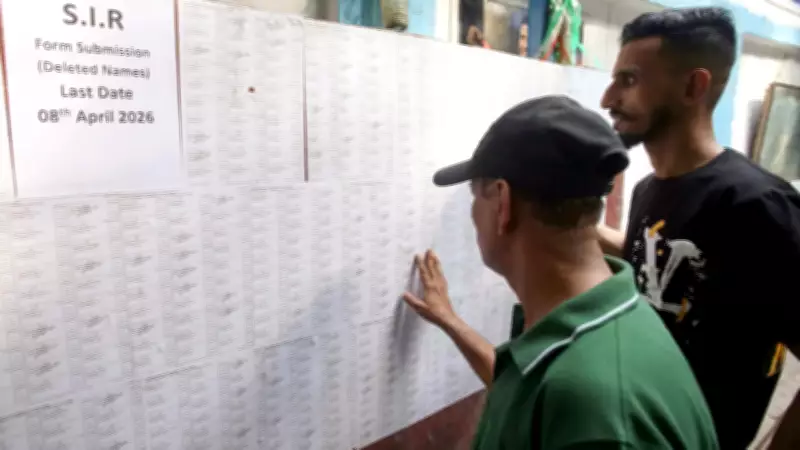
Bengal Court Case Disposal Rates Plummet as Judges Handle Voter List Adjudication
The engagement of approximately 500 judicial officers from across West Bengal in the adjudication of doubtful cases flagged on the voters' list has severely impacted the disposal of regular cases in the state's lower courts. This extraordinary assignment has led to a significant slowdown in judicial proceedings, creating a substantial backlog.
Sharp Decline in Case Clearance Rates
The overall clearance rate for cases in Bengal's lower courts stood at 62% for 2025. However, this rate plummeted to just 42% in March 2025, highlighting the strain on the judicial system. According to the district judiciary's virtual justice clock, a total of 90,685 cases were registered across the state in March, with only 38,527 cases being disposed of.
Kolkata experienced an even more pronounced slowdown, with a disposal rate of only 39%. Out of 42,687 cases registered in the city's lower courts, merely 16,717 were resolved. West Burdwan recorded the lowest rate at a concerning 19%.

Supreme Court Directive and Extended Adjudication
On February 20, a Supreme Court bench led by Chief Justice of India Surya Kant assigned judicial officers the extraordinary responsibility of examining documents for approximately 60 lakh individuals placed under adjudication during the special intensive revision of the electoral roll. Their task was to determine whether these individuals' voting rights could be restored.
The bench had initially directed an interim arrangement for shifting urgent matters to alternative courts for a week to ten days, expecting the process to be completed within that timeframe. However, the adjudication has now extended for over a month, with judicial officers facing deadlines of April 6 and 9 for the two phases of assembly polls scheduled for April 23 and 29.
Impact on Critical Cases and Judicial Workload
Special Public Prosecutor Bivas Chatterjee emphasized that the involvement of so many judicial officers in SIR duty is adversely affecting the handling of serious cases. Rape, murder, and Pocso cases, along with hearings on bail applications, are being hampered due to the reassignment of judges.
One fast-track court judge has now been put in charge of four to five other courts, whose judges are on SIR duty. As a result, getting dates for cases has become difficult. Case pendency is increasing as it is impossible to handle so much work, Chatterjee stated. This redistribution of judicial responsibilities has made it challenging to schedule hearings, leading to a growing accumulation of pending cases across the state.