

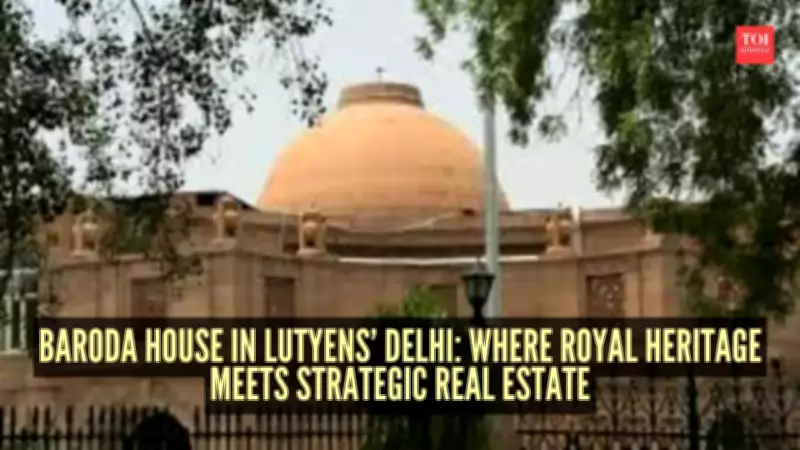
Baroda House: A Crown Jewel of Heritage and Real Estate in Delhi
Baroda House, nestled in the exclusive Lutyens’ Delhi area near India Gate, stands as a testament to royal heritage and strategic real estate value. This property, now the Zonal Headquarters of the Northern Railway, exemplifies the prestige and long-term investment potential of heritage assets in India's capital.
Prime Location in the Heart of Delhi
Located in Central Delhi, Baroda House benefits from a premium position characterized by large landholdings, low-density development, and proximity to key governmental landmarks. In real estate, location is paramount, and this property sits in one of the city's most exclusive zones, enhancing its market value and appeal.
Royal Commission and Historical Prestige
Commissioned by Sayajirao Gaekwad III, Baroda House was originally built as a princely residence. The provenance of being associated with a progressive ruler and a princely state adds intangible prestige, boosting its historical and brand value decades after its construction.

Architectural Excellence by Edwin Lutyens
Designed by the master architect Edwin Lutyens, whose work defines central Delhi's character, the structure showcases symmetry, proportion, and openness. Properties by renowned architects like Lutyens command higher heritage and cultural value, ensuring functional and aesthetic longevity.
Strong Architectural Design and Land Utilization
Baroda House features excellent land utilization with large setbacks, landscaped areas, and efficient built-up space. Elements such as the central dome, arcades, and large windows not only enhance aesthetics but also improve ventilation and usability, demonstrating architectural strength that supports relevance over time.
Adaptive Reuse for Sustainable Functionality
After independence, the building was repurposed as the Northern Railway headquarters. This adaptive reuse highlights real estate sustainability, allowing heritage structures to remain economically productive without demolition, serving administrative needs efficiently.
Heritage as a Long-Term Asset
In today's context, heritage buildings in key urban areas are rare and irreplaceable. Baroda House represents a confluence of historical identity, architectural credibility, and location advantage, affirming that real estate value extends beyond plot and structure to include legacy and strategic positioning.
Baroda House is more than a former royal abode; it is a prime example of how location advantage, architectural integrity, and sustainable asset management ensure continued relevance amidst political and economic changes in Delhi.






