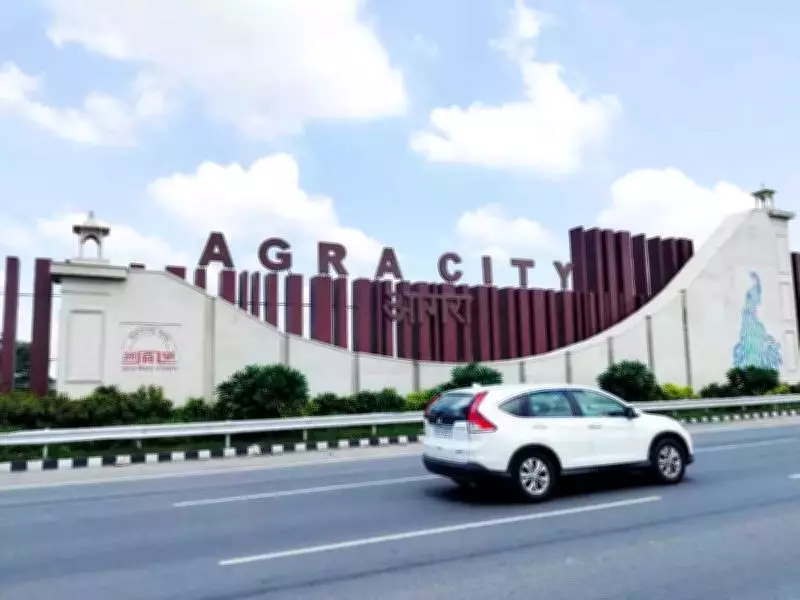
Agra's Yamuna Expressway Authority Unveils Ambitious Master Plan 2041 for Urban Centre
The Yamuna Expressway Industrial Development Authority (YEIDA) has presented a comprehensive draft Master Plan 2041 for the proposed Agra Urban Centre, outlining a transformative development spread across nearly 14,480 hectares. This ambitious blueprint is projected to generate approximately 10 lakh jobs, marking a significant step towards economic growth and urban expansion in the region.
Phased Development with Focus on Sustainability
The master plan envisages development in three distinct phases, with a strong emphasis on non-polluting industries, tourism, hospitality, information technology, and sustainability. Residential areas covering about 1,878 hectares are proposed, featuring sector-wise planning for High-Income Group (HIG), Middle-Income Group (MIG), Low-Income Group (LIG), and Economically Weaker Section (EWS) housing. This residential development is designed to cater to an estimated population of 12 to 15 lakh, ensuring inclusive urban growth.
Industrial and Tourism Zones
An industrial zone spanning approximately 3,000 hectares has been earmarked, focusing on clean and sustainable industries. In line with Taj Trapezium Zone norms, officials have stressed that only industries with a pollution score below 20 should be permitted, with YEIDA confirming that these recommendations will be incorporated into the final plan.

Tourism development will cover nearly 405 hectares across two zones, including hotels, resorts, an exhibition and trade centre, riverfront projects, theme parks, and wellness facilities. This initiative aims to boost Agra's tourism sector while promoting eco-friendly practices.
Green Infrastructure and Connectivity
The blueprint proposes extensive green cover enhancements, including a golf course, sports village, biodiversity park, two city-level parks, and four district-level parks. A 256 MW solar park is also included to support clean energy needs, aligning with sustainability goals.
Connectivity forms a key pillar of the plan, with proposed upgrades to road networks, interchanges, and transport infrastructure. These improvements will be aligned with air, rail, metro, and expressway links to ensure seamless mobility within the urban centre.
Urban Services and Water Management
For urban services, seven sewage treatment plants with a combined capacity of 335 MLD have been planned to manage wastewater effectively. Water demand, estimated at 375 MLD, is proposed to be met through the Lower Ganga canal, the Yamuna river, and rainwater harvesting systems. However, Agra divisional commissioner Shailendra Kumar Singh has flagged the need to reassess water sources to ensure long-term sustainability, highlighting potential challenges in resource management.
Next Steps and Public Engagement
YEIDA's CEO, Rakesh Kumar Singh, announced that the finalised master plan will be published soon. Following this, public objections and suggestions will be invited, allowing for community input and transparency in the planning process. This approach ensures that the development aligns with local needs and aspirations.
The Master Plan 2041 represents a forward-looking vision for Agra, balancing economic growth with environmental stewardship. By integrating sustainable practices, green spaces, and robust infrastructure, the plan aims to create a model urban centre that serves as a benchmark for future developments in India.