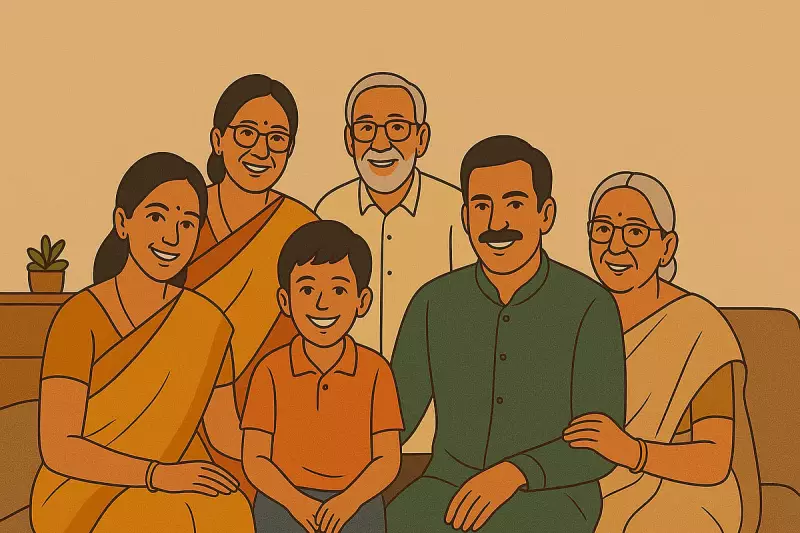
In South Indian households, where sharing daily chores and family responsibilities has long been the norm, a crucial question emerges: why isn't financial protection shared with equal importance? While progressive values have transformed domestic duties into collective efforts, financial security often remains unbalanced, leaving women potentially vulnerable.
The Disconnect Between Shared Duties and Financial Security
Traditional South Indian families have embraced the concept of shared responsibilities for generations. From cooking and cleaning to childcare and elder care, household tasks are typically distributed among family members. This collaborative approach has strengthened family bonds and created more equitable home environments.
However, this spirit of sharing frequently stops at the doorstep of financial protection. Many women in these households, despite contributing significantly to family wellbeing, remain underprotected financially. This gap becomes particularly concerning when considering life insurance coverage and long-term financial security.

The Stark Reality of Financial Protection Gaps
Recent observations highlight a troubling pattern: while women actively participate in managing household affairs and often influence financial decisions, they may not be adequately covered by life insurance policies. This oversight can have serious consequences for their financial independence and security.
The situation becomes even more concerning for homemakers, whose economic contributions, though substantial, are frequently undervalued. Without proper insurance coverage, these women face significant financial vulnerability in circumstances such as the primary earner's unexpected absence or health crises.
Bridging the Financial Protection Divide
The solution lies in extending the same collaborative spirit that governs household responsibilities to financial protection planning. Families need to recognize that true security comes from ensuring all members, regardless of their income-generating status, have adequate financial safeguards.
This involves open conversations about money management, insurance needs, and long-term planning. It requires acknowledging the economic value of homemakers' contributions and ensuring they have appropriate life insurance coverage. Such measures don't just provide financial security—they demonstrate genuine respect for every family member's role and worth.
Forward-thinking families are already embracing this approach, understanding that shared financial protection strengthens the entire family unit. They recognize that in today's uncertain world, comprehensive security means ensuring no family member is left financially exposed.
The cultural values that have made South Indian families exemplary in sharing domestic responsibilities now need to extend fully into the financial realm. By closing this protection gap, families can achieve true equality and security for all members, honoring the progressive traditions they've long championed.