World's Largest Bull Breeds: Giants of the Livestock World
There is an undeniable fascination with size that captures human attention across various domains. From architectural marvels like the tallest buildings to engineering feats such as the heaviest vehicles, our curiosity is naturally piqued by grandeur. This same principle applies profoundly to the world of livestock, where certain bull breeds have earned legendary status not merely for their strength but for their colossal dimensions.
In farming communities globally, these breeds stand out as living testaments to selective breeding and natural adaptation. When discussing the biggest bulls in the world, we refer to breeds that have cultivated a formidable reputation over decades, even centuries, due to their extraordinary height and substantial weight. These are not ordinary cattle; they are majestic animals that dominate their surroundings with impressive stature and carry a strong cultural identity in their native regions.
Sibi Bhagnari: The Pakistani Powerhouse
Originating from Pakistan, the Sibi Bhagnari breed is frequently ranked among the largest cattle breeds on the planet. These bulls typically exhibit a white or grey body, with a distinctive hump on the back of the neck that serves as a reservoir for water and fat, aiding in survival in arid climates.
In terms of sheer size, Sibi Bhagnari bulls can achieve heights of approximately 6 feet and lengths nearing 7 feet. Their weight generally ranges between 900 and 1,100 kilograms, with exceptional individuals surpassing 1,350 kilograms. This immense mass solidly positions them among the heaviest bulls worldwide, making them a cornerstone of local agriculture and a symbol of resilience.
Chianina: Italy's Ancient Giant
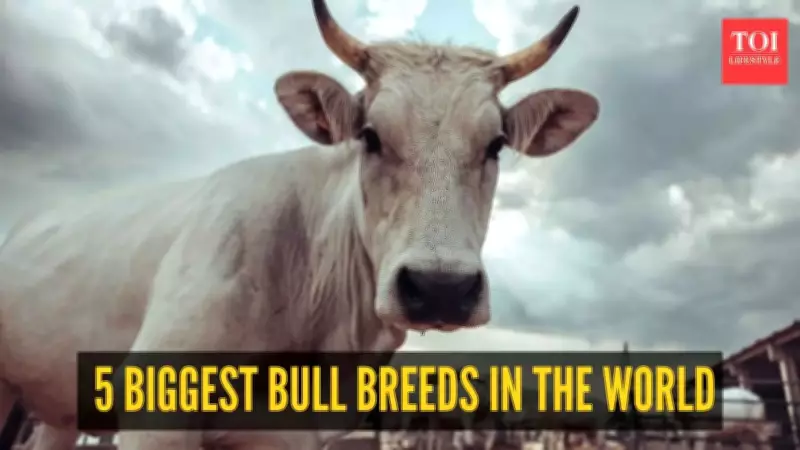
Hailing from the picturesque region of Tuscany in Italy, the Chianina breed is celebrated as one of the oldest cattle breeds globally. While its historical lineage is impressive, what truly commands attention is its remarkable height.
Chianina bulls can stand close to 6 feet tall at the shoulder, with many weighing over 1,350 kilograms. A fascinating aspect of this breed is its color transformation: calves are born with a dark coat that gradually shifts to grey and eventually turns white as they mature. Newborn calves typically weigh around 50 kilograms, but they grow rapidly into towering, robust animals renowned for both their stature and muscular build.
Maine-Anjou De Pres: France's Dual-Purpose Breed
From France, the Maine-Anjou De Pres breed derives its name from the town of Anjou and was developed in the 19th century through crossbreeding French Mancelle cattle with British Durham cattle. These bulls usually reach a height just over 5 feet at the shoulder, with an average weight of about 680 kilograms.
Historically, Maine-Anjou De Pres cattle were raised for both milk and meat production, but today, they are primarily bred for beef due to their solid and efficient build. Their inclusion in the list of large cattle breeds is well-deserved, reflecting their adaptability and contribution to French agriculture.
Parthenais: France's Ancient Draft Breed
Also originating from France, the Parthenais breed comes from Parthenay and is considered an ancient lineage. In earlier eras, these cattle were utilized for draft work, pulling heavy loads with their powerful frames.
The largest Parthenais bulls can weigh more than 1,200 kilograms and grow over 5 feet tall. Today, they are mainly raised for beef production, yet they remain a common and respected sight in many rural French areas, valued for their substantial size and historical significance.
South Devon: The UK's Largest Breed
From the United Kingdom, the South Devon breed holds the title of the largest cattle breed in the region. Its origins trace back to the 18th century in Devon and Cornwall in Southern England.
South Devon bulls can grow up to about 5 feet tall at the shoulder, with weights typically reaching around 1,130 kilograms. They are easily recognizable by their distinctive red coat. Historically, they served dual purposes for meat and draft work, and they are also noted for their rapid growth rate, making them a preferred choice for farmers seeking efficiency and size.
Disclaimer: The information presented in this article is based on online sources and ecological studies. Specific details may vary depending on the species, individual animals, and regional breeding practices.