In a significant move to bolster infrastructure in the Union Territory, Indian Railways has charted an ambitious plan to further extend its network across the Kashmir Valley. Following the historic completion of the Udhampur–Srinagar–Baramulla Rail Link (USBRL), the national transporter is now focusing on connecting the remaining parts of the region. A Detailed Project Report (DPR) for a new 164-kilometre railway line has been prepared, marking the next phase of rail expansion in this strategically important area.
Details of the New Kashmir Railway Project
Railway Minister Ashwini Vaishnaw provided crucial updates on this development in a written statement in the Rajya Sabha on December 5. The comprehensive plan consists of two major components. The first is a 46 km new line connecting Baramulla to Uri, a project that will push rail connectivity closer to the Line of Control (LoC). The second component involves the doubling of the 118 km Banihal–Baramulla section, which is part of the existing USBRL corridor. This doubling is expected to significantly enhance the capacity and efficiency of train operations in the Valley.
The national transporter has successfully completed the necessary surveys and compiled the DPR for these projects. However, the minister clarified that the sanctioning process is a multi-stage affair. It requires extensive consultation with various stakeholders, including the State Government of Jammu and Kashmir. Furthermore, the project must secure necessary approvals through the appraisal processes of NITI Aayog and the Ministry of Finance. As this is a continuous and dynamic process, exact timelines for project commencement will depend on the pace of these appraisals and clearances.

The Foundation: The Iconic USBRL Project
The new expansion plan builds upon the monumental achievement of the 272-km Udhampur–Srinagar–Baramulla Rail Link (USBRL), which was commissioned earlier this year. This project, hailed as one of the most challenging railway endeavours in post-independence India, established direct and all-weather rail connectivity between the Kashmir Valley and the rest of the country for the first time.
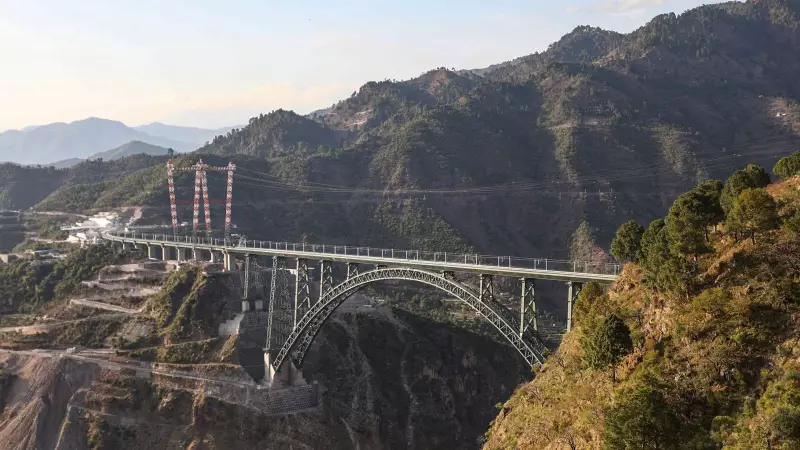
The USBRL traverses complex and young Himalayan terrain across eight districts: Udhampur, Reasi, Ramban, Srinagar, Anantnag, Pulwama, Budgam, and Baramulla. Its crown jewel is the world's highest railway bridge, the iconic Chenab Bridge in Reasi district. This engineering marvel stands 359 metres above the river bed and features a majestic 467-metre long arch span, with the overall bridge length being 1,315 metres. The successful completion of the USBRL, overcoming immense geological and technical hurdles, has paved the way for the current expansion plans.
Future Impact and Strategic Significance
The proposed 164 km expansion is set to have a transformative impact on the socio-economic landscape of the Kashmir Valley. Extending the line to Uri will improve connectivity and accessibility for remote areas, fostering local trade and tourism. The doubling of the Banihal-Baramulla section will create a more robust and reliable rail network within the Valley, allowing for increased frequency of trains and smoother logistics.
This development underscores the government's commitment to integrating Jammu and Kashmir with the national mainstream through enhanced infrastructure. Improved rail connectivity promises to boost the regional economy, provide easier and safer travel for residents, and strengthen strategic mobility. As the DPR moves through the approval channels, all eyes are on the next chapter of railway development in the Himalayas, which aims to weave the rest of the Kashmir Valley into India's vast railway map.