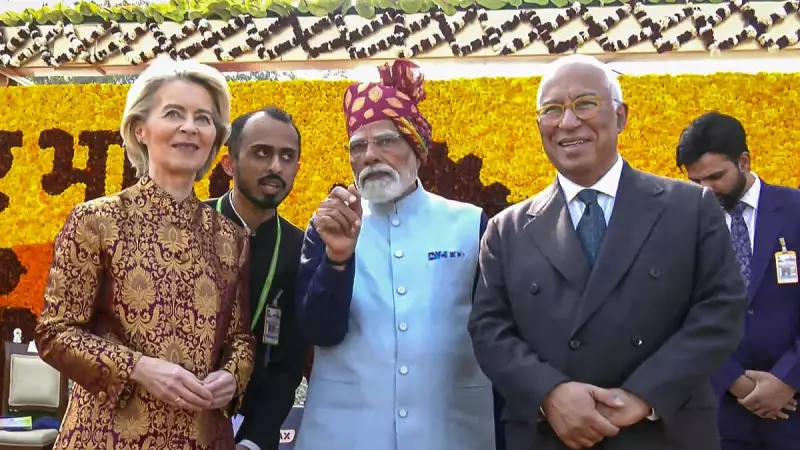
Prime Minister Narendra Modi stands at the threshold of a potentially historic moment as European Commission President Ursula von der Leyen arrives in India this week. The visit, which has been described by von der Leyen herself as aiming for "the mother of all deals," presents a unique opportunity for India to not only strengthen its ties with Europe but also to exert significant influence on the global stage, particularly in relation to US President Donald Trump.
The Significance of the EU-India Summit
This high-profile diplomatic engagement comes at a critical juncture in international relations. The European Union, under von der Leyen's leadership, is actively seeking to deepen its partnership with India, recognizing the nation's growing economic and strategic importance. For India, this visit represents more than just a routine diplomatic exchange; it is a chance to solidify its position as a key player in the multipolar world order that is currently taking shape.
Why Modi Should Embrace This Opportunity
There are compelling reasons why Prime Minister Modi should wholeheartedly pursue this ambitious deal with the European Union. First and foremost, India's own developmental needs demand stronger economic partnerships and access to European markets, technology, and investment. The potential agreement could unlock new avenues for trade, innovation, and job creation across various sectors of the Indian economy.
Secondly, Europe's enthusiastic pursuit of this deal reflects its strategic pivot toward Asia and its recognition of India as a crucial counterbalance in the region. By engaging positively, Modi can ensure that India benefits from this geopolitical realignment while maintaining its strategic autonomy.
The Trump Factor in Global Diplomacy
Perhaps the most intriguing aspect of this diplomatic maneuver is its potential impact on US President Donald Trump. A strengthened India-EU partnership would send a powerful message to Washington about the shifting alliances and economic blocs in the global arena. As Trump continues to pursue his "America First" policies and renegotiate traditional alliances, a robust India-EU relationship could serve as a strategic counterweight and influence American foreign policy calculations.
This dynamic creates a triangular relationship where India's engagement with Europe could indirectly shape its relationship with the United States, giving Modi additional leverage in future negotiations with the Trump administration.
What the "Mother of All Deals" Could Entail
While specific details of the proposed agreement remain under discussion, experts suggest it could encompass several key areas:
- Comprehensive Trade Agreement: Reducing tariffs and non-tariff barriers to boost bilateral trade between India and EU member states
- Strategic Partnership: Enhanced cooperation on security matters, including counterterrorism and maritime security
- Technology Transfer: Collaboration on emerging technologies such as artificial intelligence, renewable energy, and digital infrastructure
- Climate Change Initiatives: Joint efforts to address environmental challenges and promote sustainable development
- People-to-People Ties: Easier mobility for students, professionals, and tourists between India and European countries
Historical Context and Future Implications
This visit occurs against the backdrop of India's evolving foreign policy under the Modi administration, which has emphasized strategic autonomy while building multiple partnerships. A successful outcome from von der Leyen's visit could mark a watershed moment in India-EU relations, potentially creating one of the world's most significant economic partnerships.
The timing is particularly noteworthy as it coincides with broader global realignments and uncertainties in traditional alliances. By seizing this opportunity, Modi could not only secure immediate economic benefits for India but also position the country as a central actor in shaping the new global order that is emerging in the 21st century.
As the diplomatic discussions unfold this week, all eyes will be on whether Prime Minister Modi can translate this opportunity into concrete outcomes that benefit India's national interests while influencing the broader geopolitical landscape, including relations with the United States under President Trump's administration.