Punjab's Premier Agricultural and Livestock Melas Commence Amidst Enthusiasm
The much-anticipated Kisan Mela at Punjab Agricultural University (PAU) and the Pashu Palan Mela at Guru Angad Dev Veterinary and Animal Sciences University (GADVASU) officially opened on Friday, marked by fervent participation and overcast skies following rain predictions. These events serve as pivotal platforms for farmers, researchers, and policymakers to converge on advancing Punjab's agricultural and livestock sectors.
Chief Minister Unveils Support and Vision for Agricultural Advancement
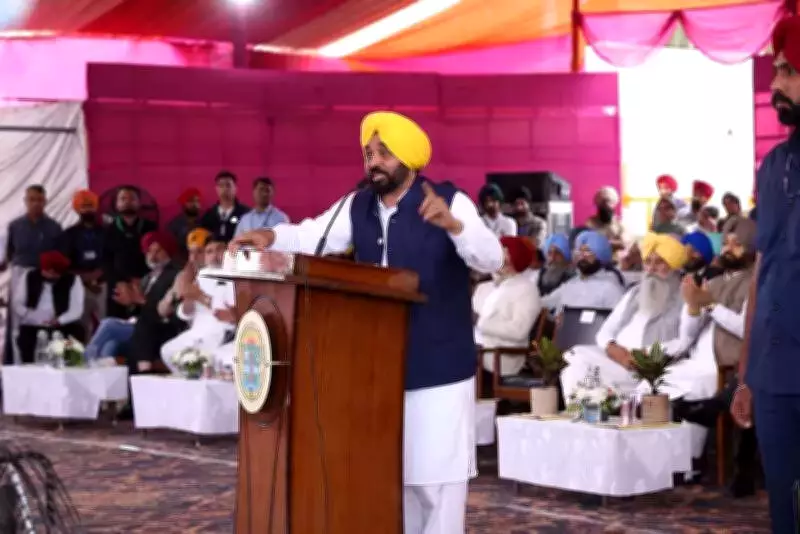
Inaugurating the Kisan Mela under the theme "Adoption of crop diversification for environmental protection," Chief Minister Bhagwant Mann highlighted the transformative evolution in teaching and farming methodologies. He emphasized a pragmatic approach, advising PAU to "First experiment and then recommend to the farmers" to ensure practical applicability.
Commending PAU for achieving a top global ranking in 2024-25, the CM praised Vice-Chancellor Dr. Satbir Singh Gosal for his steadfast dedication to elevating the university through innovative breakthroughs and setting benchmark standards. Mann assured comprehensive financial backing for PAU's overhaul, with a specific focus on enhancing hostel facilities and sports infrastructure, including the development of a hockey turf. This upgrade is crucial as Punjab prepares to host the Hockey Asia Cup in October across Bathinda, Jalandhar, Ludhiana, and Mohali.

Disclosing significant fiscal commitments, the Chief Minister announced that a total of ₹118 crore has been allocated to PAU for agricultural research, with promises of increased financial assistance moving forward. He also outlined collaborative efforts with the Japan International Cooperation Agency to strengthen horticulture and residue management enterprises, underscoring a multifaceted strategy to propel agriculture forward.
Addressing Critical Agricultural Challenges Through Diversification
Dr. Satbir Singh Gosal, Vice-Chancellor of PAU, underscored the urgent need to tackle pressing issues such as water depletion, climate change, stubble burning, and declining farm incomes. He advocated for crop diversification and value addition as essential solutions. "A drastic shift from traditional to modern, water-guzzling to water-saving, and climate-risk to climate-resilient technologies is the voice of contemporary farming," Dr. Gosal remarked, highlighting the imperative for adaptive agricultural practices.
Dr. A.S. Dhatt, Director of Research at PAU, unveiled new agricultural recommendations, including the development of:
- One variety each of paddy, cotton, and maize
- Eight vegetable varieties
- Three fruit varieties
- One agro-forestry variety specifically tailored for Punjab's conditions
Pashu Palan Mela Emphasizes Livestock Entrepreneurship and Global Standards
Simultaneously, the Pashu Palan Mela at GADVASU was inaugurated by Khuddian, who emphasized dairy farming as a reliable source of daily income. He detailed various government schemes aimed at supporting the farming community and encouraged farmers to explore livestock-based entrepreneurial ventures to boost their earnings.
Dr. Jatinder Paul Singh Gill, Vice-Chancellor of GADVASU, revealed the mela's theme: 'Livestock Farming: Local strength to Global standards.' He urged farmers to blend scientific approaches with traditional knowledge, assuring them of the university's ongoing support and open-door policy for adopting modern technologies.
Dr. Ravinder Singh Grewal, Director of Extension Education, noted significant interest in goat, pig, and fish farming, with numerous inquiries about training programs. The event featured:

- Demonstrations of high-quality germplasm, including cows, buffaloes, goats, and poultry
- Expert lectures and interactive Q&A sessions on management solutions and treatment awareness
- Live demonstrations of milk testing kits, mastitis diagnosis, teat dipping, and acaricide applications
Innovations in Fisheries and Allied Sectors Showcased
The College of Fisheries presented innovative displays, such as carp and ornamental species, along with demonstrations of azolla cultivation and integrated fish farming. Farmers expressed keen interest in saline water fisheries, and the college introduced an ornamental fish rocky-planted garden pool designed to engage younger generations.
A notable launch included cost-effective, nutrient-rich fertilizer sticks for potted plants, made from duckweed and azolla, which release nutrients for over 60 days. Additionally, Self-Help Groups trained by the universities exhibited and sold value-added products, receiving an enthusiastic response from farmers and rural youth, highlighting the potential for community-driven agricultural entrepreneurship.