Under the Uttar Pradesh government's 'One District One Cuisine' (ODOC) scheme, Noida stands out for an unusual reason. It has been mapped for cake and bakery products rather than a traditional local dish. The choice reflects industrial reality more than culinary heritage.
Scheme Details and Objectives
The scheme, cleared by the state cabinet, aims to promote region-specific food specialities by offering subsidies of up to 25% (capped at Rs 20 lakh) to food sector entrepreneurs. With a total outlay of Rs 150 crore, the initiative is expected to help scale local food economies and give wider recognition to district-level specialities.
Why Bakery Products for Noida?
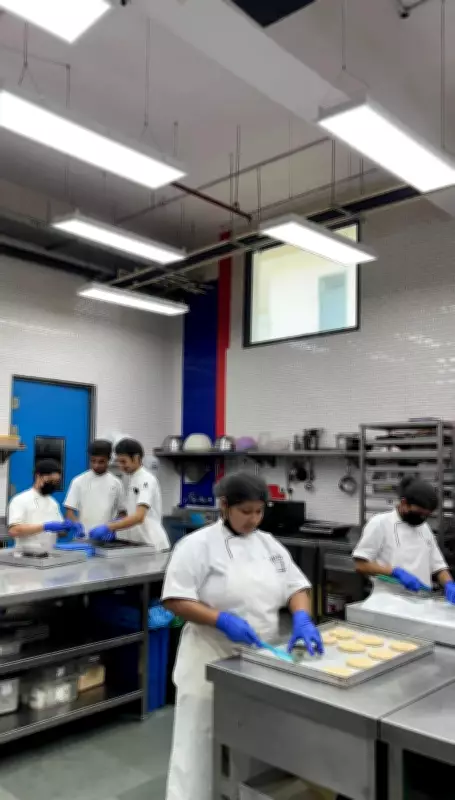
For Noida, officials said there was no single identifiable native delicacy rooted in its legacy. However, what the district does have is production. The district’s deputy commissioner (industries), Pankaj Nirwan, said, “GB Nagar does not have any special delicacy of its own. We conducted a survey earlier this year and found close to 20,000 bakeries operating here — from small neighbourhood units to large-scale manufacturers.”

Of these, around 6,000 are smaller establishments, including cafés and local bakeries, while the rest comprise large production units, including multinational players and bulk manufacturers. “The ecosystem spans sweet and savoury segments — cakes, pastries, biscuits, rusks, namkeen and traditional items like feni found on tea stalls. Hence we decided to incorporate this category for the scheme as it would benefit these MSMEs,” said the official.
Industrial Bakery Base
The district’s industrial base in bakery production is not new. Established biscuit manufacturers such as Anmol Biscuits and PriyaGold have had a presence here since the mid-1990s. Large bread production units, including that of English Oven, operate out of Greater Noida. Over the years, the region has also attracted premium and global brands on the manufacturing side.
Luxury French pâtisserie Ladurée, for instance, runs a 20,000 sq ft central production facility, supplying macarons and pastries to its outlets across India, even though it does not have a retail store in the city. Similarly, L’Opéra, which has a retail presence in Sector 16B, also has a manufacturing unit in Sector 2.
Production Scale and Supply Chain
Shorya Kapoor, a bakery technologist who runs a business-to-business brownies manufacturing unit in Greater Noida since 2020, said that the bakery industry in GB Nagar produces at least 20 metric tonnes of bakery items per day. “Most of the units supply products to cafes, departmental stores across NCR, as well as to bakery start-ups which have entered into the business recently and are driven by the e-commerce boom,” he said. Kapoor’s company, The Cyprus, supplies brownies to Harvest Gold pan-India, as well as some other brands like Me&Millets, and produces around 4 metric tonnes of the bakery item on a daily basis.
Retail Bakery Culture Growth
Alongside this backend growth, the retail bakery culture has seen a steady rise over the past two decades. Theos, one of Noida’s most recognisable patisseries, started with a single outlet in 2007 and has since expanded to multiple locations across NCR. Its founder, Gaurav Wadhwa, recalls a very different market when he first set up shop.
“When we opened in 2007, there were barely any dedicated bakeries. Cakes were mostly sold at grocery stores. We were among the first to introduce a French pâtisserie format in Noida, and people would compare us to legacy outlets in Delhi,” he said.
Since then, demand patterns have shifted. Wadhwa points out that brands are now willing to prioritise Noida as a launch market. “The culture has evolved significantly. Some brands opened in Noida even before expanding to Gurgaon,” he added. His company has scaled its manufacturing from a small kitchen in Sector 41 to a 70,000 sq ft facility in Sector 80.

Absence of Iconic Local Bakery
Despite the scale and growth, industry insiders acknowledge the absence of a single iconic bakery that defines the district in the way some cities are known for specific sweets or dishes. “Local bakeries and cake shops have existed for years, but none has achieved that kind of identity at a district level,” said Varun Khera, president of the National Restaurants Association of India (Noida chapter). He points to long-running outlets like Bon Bon in Sector 18 as local favourites, but not as defining culinary symbols.
Government Approach
This gap perhaps explains the govt’s approach. In Gautam Budh Nagar, ODOC is less about preserving a traditional recipe and more about formalising and scaling an existing industry cluster.