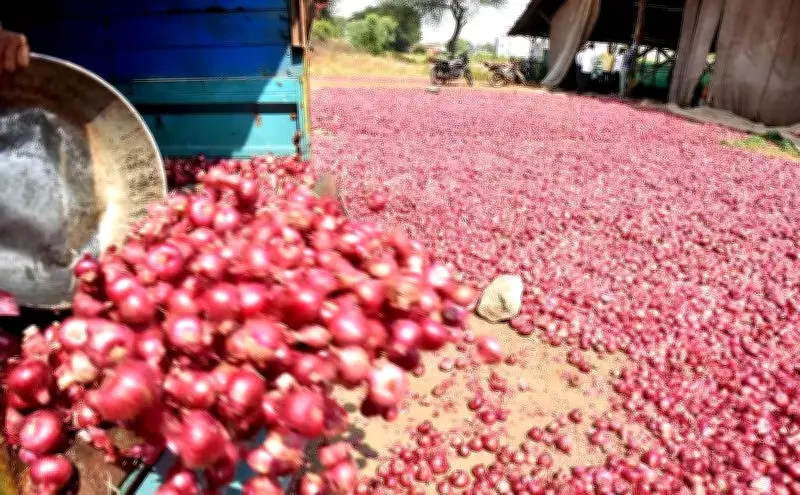
Nashik Summer Onion Production Set for Sharp 29% Decline
Summer onion output in Nashik district is anticipated to drop by approximately 29% this season, driven by a contraction in cultivated area and extensive crop damage caused by unseasonal rainfall and hailstorms between March 19 and April 2. This significant reduction highlights the vulnerability of agricultural yields to erratic weather patterns.
Reduced Cultivation Area and Severe Crop Damage
Data from the state agriculture department reveals a notable decrease in the area under summer onion cultivation in Nashik. The acreage has shrunk from 2.51 lakh hectares in the 2024-25 season (December to April) to 2.25 lakh hectares in 2025-26. Compounding this issue, heavy rainfall accompanied by hailstorms has damaged onion crops across nearly 44,000 hectares, severely impacting overall yields.
As a result, summer onion production in the district is projected to fall from about 58.84 lakh tonnes last year to nearly 41.63 lakh tonnes this season, according to agriculture department sources. Officials noted that the unseasonal weather not only caused extensive crop loss but also reduced productivity in other areas, with average yields declining from around 25 tonnes per hectare to about 23 tonnes per hectare.

Impact on Maharashtra's Onion Export Dominance
Maharashtra stands as one of India's largest onion-exporting states, accounting for nearly 65% of the country's total onion exports. Nashik district alone contributes around 90% of the state's exports, making this production drop particularly consequential for the national export landscape.
Vikas Singh, vice-president of the Horticulture Produce Exporters Association of India, informed that the Union agriculture ministry estimates an 11% decline in summer onion production nationwide. According to the first advance estimate, national summer onion output is expected to fall from 377 lakh metric tonnes last year to about 277 lakh metric tonnes this year.
Export Slowdown Amid Geopolitical Tensions
Singh explained that summer onions, harvested during March and April, typically experience strong export demand between March and May. However, exports have slowed this year due to geopolitical tensions linked to the ongoing Iran-US/Israel conflict. Shipments to Gulf and other markets have dropped sharply, while freight charges have surged from around $600 per container to nearly $7,500.
Each container carries roughly 30 metric tonnes of onions, rendering exports commercially unviable for many traders. Despite the expected fall in production, domestic markets are unlikely to face shortages, as subdued exports will ensure sufficient onion availability within the country.
Seasonal Storage and Market Dynamics
Officials detailed the differences in onion varieties: kharif and late-kharif onions, grown between July and November and harvested from October to February, have a shelf life of less than a month, forcing farmers to sell them quickly. In contrast, summer onions, sown in December and January and harvested in March and April, can be stored for six to seven months.
Farmers typically hold these onions and release them into APMC markets based on their financial needs. With no fresh onion crop available between May and mid-October, stored summer onions continue to meet market demand until the arrival of fresh kharif onions towards the end of October.