Jewar's Economic Transformation Sparks Unprecedented Car Sales Boom
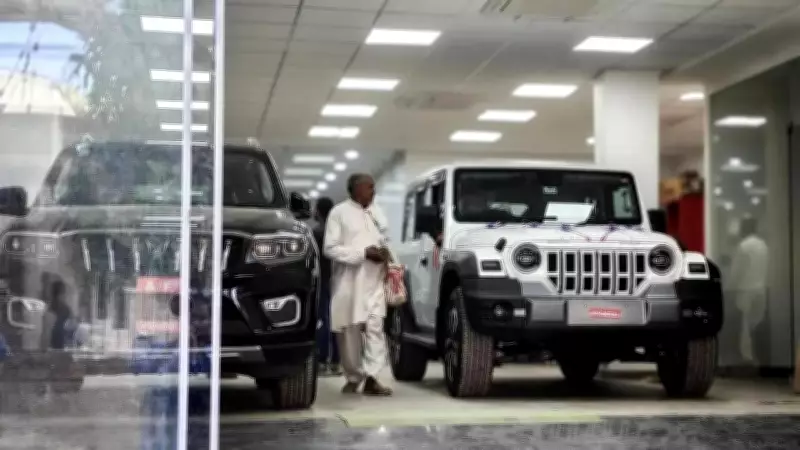
The rural landscape of Jewar has undergone a dramatic economic metamorphosis, fueled by commercial activity surrounding the upcoming airport and substantial compensation payments to landlosers. This newfound prosperity is now visibly manifesting in a distinctly Delhi-NCR characteristic: an insatiable appetite for automobiles. Over the past two to three years, the area has witnessed a remarkable influx of major car manufacturers establishing booking offices and showrooms, fundamentally altering local consumer behavior.
From Humble Beginnings to Automotive Gold Rush
Mahindra pioneered the automotive retail presence in Jewar by opening the first car showroom back in 2013. However, the real transformation began in earnest around 2021-22, as compensation cheques started reaching farmers whose land was acquired for the ambitious airport project. This financial infusion triggered a domino effect, with industry giants like Hyundai, Tata Motors, and Maruti Nexa swiftly establishing their outlets to capitalize on the burgeoning market.
What truly astonishes dealers is not merely the increased sales volume, but the fundamental shift in payment patterns. Where previously buyers would travel to Noida or Aligarh for vehicle purchases and typically rely on financing options, a significant portion of Jewar's new clientele now prefers immediate full payment, bypassing EMIs altogether.

Quantifying the Automotive Revolution
Ram Yadav, store manager at the Mahindra showroom in Jewar, provides concrete evidence of this transformation. "Monthly deliveries have more than tripled since 2021-22," he reveals. "Earlier, we sold around 15-20 cars a month. Since 2022-23, at least 50-60 cars are delivered every month." The demand is particularly strong for SUVs, with models like the Thar and Scorpio-N dominating preferences. Yadav notes another telling change: "Many customers also ask for VIP registration numbers. Earlier, buyers hesitated even about the down payment. Now a large number are purchasing vehicles outright."
The growth trajectory at Tata Motors has been even more spectacular. Sales manager Deepak Singh reports monthly figures rising nearly fivefold—from a modest five or six units to an impressive 25-30. "Most customers are purchasing in cash, and many of them are above 50 years of age," Singh observes, highlighting the demographic shift.
Hyundai's journey mirrors this expansion. Manager Amit Chauhan explains that after initially operating through village-level stalls, the company opened a full showroom in 2022. Sales have since jumped from eight to ten units monthly to a robust 15-20. The consensus among dealers is clear: the most significant change lies in payment behavior. Where loan dependency was once universal, a growing segment now arrives prepared to conclude transactions immediately with full payment.
Beyond Basic Transportation: The Rise of Premium Preferences
This automotive boom extends beyond mere vehicle acquisition. Buyers are increasingly gravitating toward higher-end variants, premium accessories, alloy wheels, and customized infotainment systems. The automobile has evolved from a utilitarian purchase to a statement of personal style and status.
Ripple Effects: Jewar Emerges as a Nascent Automobile Hub
The impact radiates far beyond car showrooms. Jewar is quietly but steadily emerging as a comprehensive automobile hub. New accessory shops and tyre dealerships are proliferating across the area. Manu Yadav's business evolution encapsulates this trend perfectly. He has transformed his small tyre repair shop for cycles and motorcycles into a full-fledged car detailing enterprise offering ceramic coating, interior deep cleaning, scratch removal, and seat shampooing. "Pehle Jewar mein sirf tractor dikhte the (earlier, only tractors were visible here)," he reminisces, underscoring the profound change.

The Car as Practical Necessity and Social Symbol
For residents, the automobile serves dual purposes. With limited public transport infrastructure and considerable distances to essential services like hospitals, markets, and schools, private vehicles fill a critical practical gap. "Having a car makes daily life easier," explains Ajeet Singh, a farmer from Rohi village who purchased a vehicle after receiving compensation. "For hospitals, markets or schools, we have to travel to nearby towns."
Harish Singh from Dayanatpur identifies a deeper sociological shift. "Earlier, motorcycles were common. Now families prefer cars because roads are improving and incomes have increased. Sometimes, it also denotes a status in society," he reflects. The car has become both a tool of mobility and a marker of economic ascent, symbolizing Jewar's rapid integration into the broader NCR developmental narrative.