Japan's Deep-Sea Mining Breakthrough: Unearthing the 'Rare Earth Giant'
In a landmark achievement for global resource security, Japan has successfully retrieved samples from a colossal deposit of rare earth elements located an astonishing 6000 meters beneath the surface of the Pacific Ocean. This monumental discovery, often referred to as the 'rare earth giant,' represents a potential paradigm shift in the sourcing of critical minerals essential for modern technology.
The Discovery and Its Scale
The deposit, situated in the Minamitorishima region, contains over 16 million metric tons of specialised oxides. Initial extraction tests have already been conducted, confirming the viability of accessing these resources from extreme depths. According to analyses from the University of Tokyo's Kato Laboratory, this single deposit holds sufficient yttrium to satisfy current global demand for approximately 780 years and enough dysprosium to meet needs for around 730 years.
Technical Marvel: The Chikyu Drilling Mission
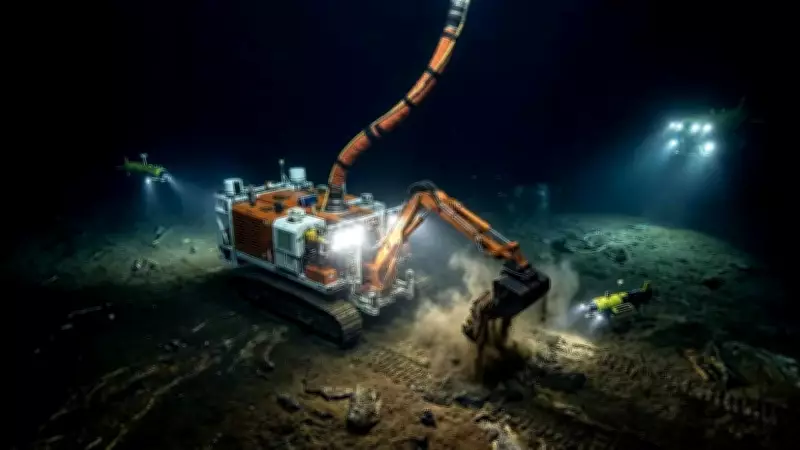
The pioneering extraction was led by the University of Tokyo utilizing the deep-sea drilling vessel Chikyu, renowned as the world's most advanced ship of its kind. During a 2026 research voyage, the team employed a specialised 'riser' pipe system to lift the mineral-enriched sediments from the seabed. This operation occurred at depths where pressure is approximately 600 times greater than at sea level, showcasing remarkable engineering prowess.

Strategic Importance for Japan and the World
This discovery holds profound strategic implications. Japan, which currently relies heavily on land-based suppliers, plans to leverage these deep-sea resources to significantly reduce its dependency. The rare earth elements and yttrium-rich muds are crucial for manufacturing high-efficiency permanent magnets, which are indispensable components in:
- Electric vehicle motors, including those used in brands like Tesla
- Wind turbine generators for renewable energy
- Advanced defence technologies and various high-tech applications
The International Energy Agency has highlighted that such deepwater minerals could become the 'new oil' of the 21st century as the global economy transitions away from fossil fuels.
What Constitutes the 'Rare Earth Giant'?
Contrary to any mythical connotations, the 'rare earth giant' refers to the massive sediment deposit containing 17 different rare earth metals. These elements are often described as the 'vitamins' of contemporary technology due to their critical role in enhancing material properties. The deposit's composition makes it exceptionally valuable for sustaining technological advancement through the next century and beyond.
Future Implications and Global Supply Chains
By providing an alternative, seabed-based source of these critical materials, Japan's breakthrough could dramatically alter global resource dynamics. The successful extraction from unprecedented depths opens new frontiers in mining and could inspire similar deep-sea exploration initiatives worldwide. This development not only promises to bolster Japan's economic and technological sovereignty but also contributes to diversifying the global supply chain for essential minerals, thereby enhancing overall resource security in an increasingly tech-dependent world.