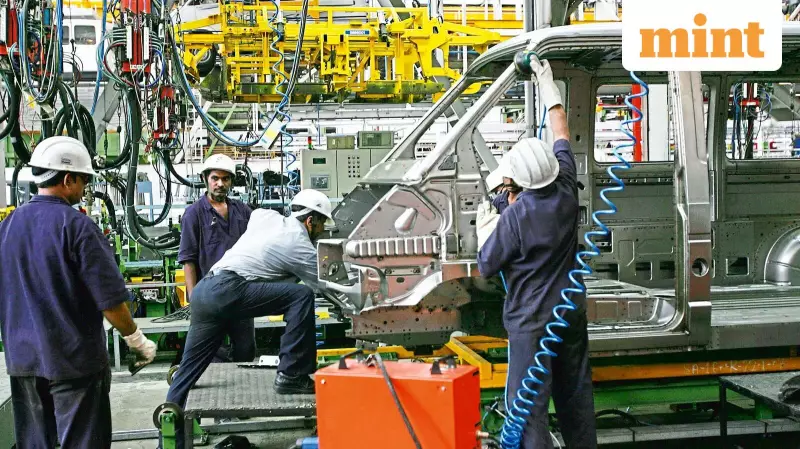
A persistent narrative among Indian industrialists blames restrictive labour regulations for stifling the country's manufacturing ambitions. However, a deeper examination reveals a more fundamental flaw: a chronic failure to innovate. The recent push for longer work hours, including controversial calls for 70 or even 90-hour weeks, is a misguided solution that overlooks the real bottleneck holding back India's industrial transformation.
The Long-Hours Push and Legislative Shifts
While global discourse centers on artificial intelligence reducing human labor, a counter-current is gaining momentum in India. Several prominent corporate leaders have publicly advocated for extremely long workweeks as a national imperative for development. This context makes the recent overhaul of labour laws, delayed for five years over political concerns, particularly significant.
The four new consolidated codes, while retaining the 48-hour weekly limit, have introduced flexibility by allowing four 12-hour shifts as an alternative to the traditional six eight-hour days. This move subtly legitimizes the notion that a standard eight-hour day might be insufficient. This trend isn't confined to the federal government. Key industrial states like Gujarat, Karnataka, Telangana, Andhra Pradesh, and Tamil Nadu have enacted similar pro-employer changes, as noted by labour researcher Bhargav Oza. The widespread political consensus suggests a belief that easing regulations will attract investment and catalyze a manufacturing boom akin to China's.

The Real Culprit: A Staggering Innovation Gap
Yet, the data tells a different story. Restrictive laws are not the reason manufacturing's share of India's GDP plummeted from 18% in 1995 to 12.5% in 2024, its lowest level since at least 1960. Economist Ha-Joon Chang offers a pointed explanation: India's business elites, often with strong financial sector ties, lack the appetite for serious, long-term industrialization, preferring short-term returns.
This is corroborated by an International Monetary Fund analysis showing India lagging in crucial areas like firm-level R&D investment, new product introduction, and process improvement. The nation trails not only developed economies but also low-income developing countries. This innovation deficit cannot be pinned on labour. The core of Indian capitalism remains unfinished, with a vast majority of small manufacturing units being single-person ventures, blurring the lines between profit and wages.
Enforcement Realities and the Shadow of the Pandemic
The gap between law and practice is stark. Even under previous eight-hour limits, factories in places like Surat, Gujarat, routinely extracted 12-hour shifts. This reality was brutally exposed during the pandemic, which triggered mass reverse migrations of jobless workers. The scarring from that crisis is reflected in the new codes' provisions for migrant worker welfare, mandatory appointment letters, and social security for gig workers.
However, expectations from this "historic reform" must be tempered. Consolidating 29 laws into four may raise hopes, but will it end the notorious 'inspector raj'? Similarly, while allowing women night shifts is progressive, enforcement of required safeguards remains a critical question.
Ultimately, the drive for longer hours appears as a deflection. Finance-obsessed capitalists, facing squeezed exports from trade tensions like former US President Donald Trump's 50% tariffs and a sped-up AI innovation cycle, seek to extract more from labour rather than invest in technology and new markets. As the analysis concludes, no country will achieve 21st-century prosperity by simply taking more hours from its working class. For India, the path to a manufacturing renaissance runs through laboratories and design centers, not just longer factory shifts.