Indian Car Market Achieves Record Sales of 4.7 Million Units in FY26
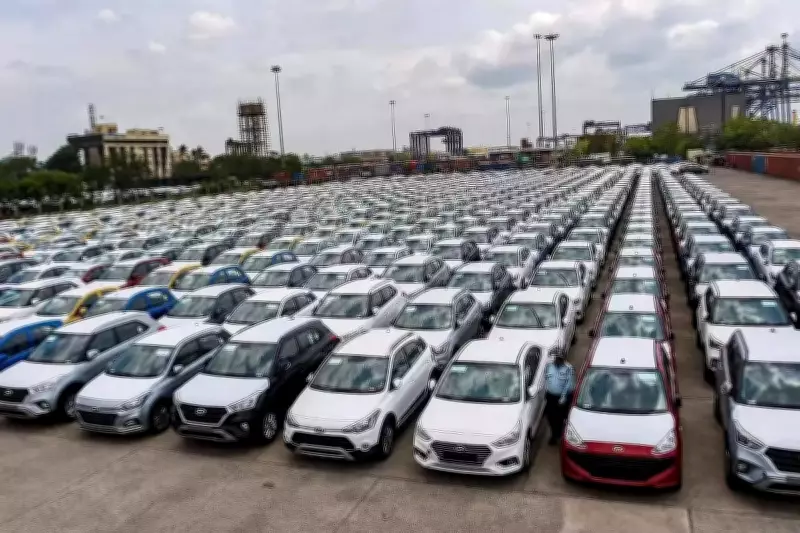
Spurred by GST 2.0 rate cuts implemented in September last year and more accessible consumer bank lending rates, the Indian car market defied geopolitical tensions and concerns over US trade tariffs to close the fiscal year at a historic high. Sales reached 47 lakh units, equivalent to 4.7 million, in FY26, marking a robust 9% growth compared to the 43 lakh units, or 4.3 million, sold in the previous fiscal year.
SUV Segment Dominates with 58% Market Share
The surge in overall sales was overwhelmingly led by SUVs, which expanded their share in total industry sales from an estimated 54% in FY25 to 58% in FY26. SUVs have become the primary focus for the car industry, witnessing the most launches in recent years as consumers embrace them across various price points. This range spans from the sub-Rs 10 lakh Punch mini by Tata Motors to the over Rs 1 crore powerful GLS by Mercedes-Benz.
Mahindra & Mahindra Emerges as Second-Biggest Player
Mahindra & Mahindra, the country's largest SUV seller, experienced a robust 20% growth in FY26, selling 6.6 lakh units compared to 5.5 lakh units in FY25. Driven by popular models such as the Thar, Scorpio-N, and XUV7OO (now known as XUV7XO), the company has capitalized on the growing consumer preference for SUVs. This trend even prompted Mahindra to launch electric vehicles like the BE6, XEV9E, and XEV9S with SUV body styling, further solidifying its market position.

As a result, Mahindra surpassed Hyundai to become the second-biggest passenger vehicle maker in India. Hyundai faced a significant decline, also falling behind Tata Motors, which secured the third position in fiscal sales.
Maruti Suzuki Maintains Leadership with 3.5% Growth
Maruti Suzuki, India's top passenger vehicle maker, reported total domestic sales of 18.2 lakh units in FY26, up from 17.6 lakh units in the previous year. This growth was partly aided by GST cuts on small cars. While traditionally strong in small cars, Maruti has been increasing its share in the SUV category through models like the Brezza, Grand Vitara, and Fronx, contributing to a 3.5% volume increase.
Partho Banerjee, Senior Executive Officer (Marketing & Sales) at Maruti Suzuki, noted steady demand following GST rate cuts and repo rate reductions by the RBI. He added that there has been no immediate impact on the component supply chain due to the Iran war. However, he highlighted building pressure on input costs, which may lead to vehicle price revisions soon.
"So far, tailwinds are still there, and we don't see headwinds. The market is pretty buoyant. There is pressure on costs partly due to commodity prices and the (Iran) war," Banerjee said. "We need to take a call on prices soon, very very soon."
Tata Motors and Other Brands Show Strong Performance
Tata Motors continued its strong growth trajectory, closing FY26 at 6.3 lakh units with a 14% increase, driven by models like the Nexon, Punch, and the newly launched Sierra. Shailesh Chandra, MD & CEO of Tata Motors Passenger Vehicles, attributed the industry's rebound to GST 2.0 implementation and a robust festive season, expecting sustained momentum in SUVs, CNG, and EV segments.
"Looking ahead, industry momentum is expected to sustain, led by growth in SUVs, CNG and EV. At the same time, the industry will need to closely monitor geopolitical developments to mitigate potential supply-side risks," Chandra stated.
Other notable performers included Toyota, which saw a 19% growth led by models like Fortuner and Innova, and Skoda, which benefited from strong demand for its mini SUV, the Kylaq. Ashish Gupta, Brand Director for Skoda Auto India, emphasized that growth was driven by an accessible product portfolio and customer-centric initiatives.
Industry Outlook and Challenges
Despite the record sales, the industry remains cautious about geopolitical developments, particularly the Iran war, which could affect supply chains. Initial estimates peg the growth forecast for FY27 at around 5%, indicating a potential slowdown. Companies are advised to monitor these factors closely to navigate potential risks and maintain growth in the competitive market.