The Gurugram Metropolitan Development Authority (GMDA) is planning to construct an 800-metre-long stormwater drain along the Delhi-Gurgaon Expressway at Narsingpur. The project aims to enhance drainage capacity and mitigate waterlogging on this flood-prone stretch.
Project Details and Cost
The authority has floated a tender for the project, estimated to cost Rs 8.28 crore. Officials stated that the work is expected to take approximately six months after the contract is awarded. The initiative involves building two RCC box drains beneath the service road along the Narsingpur-Cyber Park stretch on the Jaipur-Delhi side of the expressway.
Drainage Network Expansion
The proposed drain will extend from existing culvert number 2, which carries stormwater from the opposite side of the expressway, to Radha Krishna Garden Road. It will connect to a 650-metre drain currently under construction by GMDA at Narsingpur, which will eventually discharge into the Badshahpur drain in Sector 37.

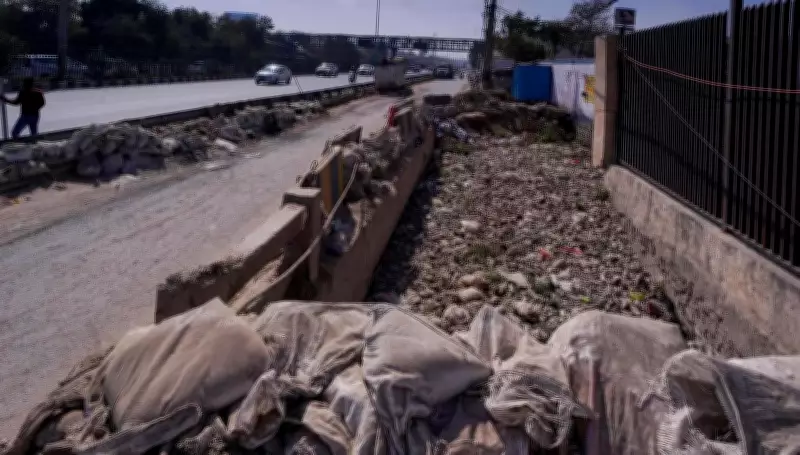
Officials noted that the project is intended to augment the capacity of existing surface drains built by the National Highways Authority of India (NHAI). These drains vary in size and are unable to handle the stormwater load during heavy rainfall. Runoff from multiple catchment areas will be channelled through the proposed drainage network as part of a broader effort to address chronic waterlogging in the area.
HSIIDC's Parallel Project
Haryana State Industrial and Infrastructure Development Corporation (HSIIDC) is also undertaking the construction of a surface drain along the Delhi-Jaipur side of NH-8. In the first phase, a 1.2-km RCC drain will be laid along the stretch. The project includes widening the service road by 15 metres to ease traffic movement and was allotted to an agency last month. However, construction has not begun due to restrictions on tree felling following directions from the Punjab and Haryana High Court.
“Though we had obtained permission from the forest department earlier, we cannot start the work because of the High Court directions,” an HSIIDC official said.
Cross-Highway Connection
The HSIIDC drain is designed to channel rainwater accumulating along the Delhi-Jaipur carriageway towards the Badshahpur drain through a culvert. Initially, NHAI was expected to construct the culvert, but GMDA is now undertaking this work by laying three 900-mm-diameter pipes beneath NH-8 using trenchless technology. This method allows underground construction without disrupting traffic on the busy expressway.
The project remained stalled for nearly a year amid discussions between GMDA and NHAI over the design and construction methodology of the cross-highway connection. Officials explained that the 650-metre drain was designed to carry runoff from the Jaipur-Delhi side of the expressway, but an additional culvert was later found necessary to transfer stormwater from the opposite carriageway as well.
Expected Completion and Impact
While most of the work on the 650-metre drain has been completed, GMDA has also started laying piped culverts, which are expected to be functional this monsoon. However, the proposed 800-metre drain and the HSIIDC project are likely to be completed before the next monsoon season.
“Work on the piped culvert has already begun, and with the completion of the 650-metre drain, we expect to mitigate waterlogging to a large extent. Moreover, the proposed new drains, for which the tendering process has already started, will further strengthen the stormwater drainage network in the area,” a senior GMDA official said.