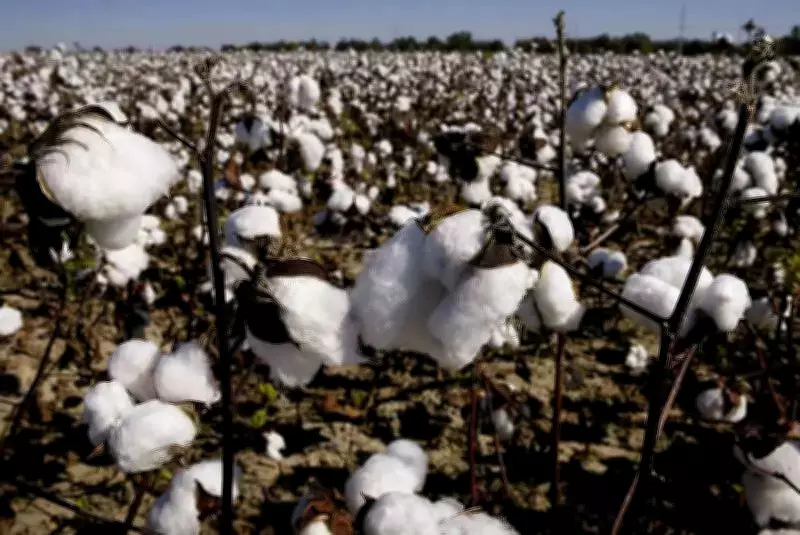
The cotton market in Coimbatore is witnessing a significant surge, with prices climbing to ₹58,000-59,000 per candy (356kg), a sharp increase from ₹56,000 recorded on January 15. This upward trend is primarily driven by the expiration of the import duty waiver, which has placed spinning mills across Tamil Nadu in a precarious financial position.
Impact on Tamil Nadu's Spinning Industry
Tamil Nadu is a crucial hub for India's textile sector, housing approximately 46% of the country's spinning mills. Nearly 1,000 units operate from districts including Coimbatore, Tirupur, Madurai, and Dindigul. Notably, Coimbatore and Tirupur alone are home to about 400 medium-sized spinning mills, making this region highly sensitive to fluctuations in raw material costs.
Price Trajectory and Government Measures
At the beginning of the current harvest season in November, cotton was priced between ₹53,000 and ₹54,000 per candy. To address supply constraints, the Union government had implemented an 11% import duty waiver on cotton from August to December. This measure allowed mills to source raw materials through imports, helping to stabilize the market. However, the waiver concluded on December 31, leading to a steady price increase that reached ₹56,000 per candy by mid-January and has since escalated further.

Industry Voices and Challenges
P Prabhu, vice-president of the Indian Spinning Mills Owners Association, highlighted the non-extension of the duty waiver as a key factor behind the sudden price hike. He pointed out that the Cotton Corporation of India is selling cotton at a premium of ₹800 to ₹1,200 per candy, exacerbating the shortage of quality cotton. While yarn prices have risen by 8-10 per kg, weak market demand has forced spinning mills to operate at a loss.
Prabhu emphasized, "Indian cotton prices are now higher than international levels, which hover around ₹52,000–53,000 per candy. This disparity makes it increasingly difficult for domestic mills to compete globally."
Calls for Government Intervention
In response to the crisis, textile industry representatives have urgently appealed to the Centre to extend the cotton import duty waiver for an additional three months. They argue that this step is necessary to curb what they describe as artificial price inflation. Additionally, they have sought the state government's intervention to press the Centre on this critical issue.
Long-Pending Demands
The industry has also reiterated its long-standing demand for the Cotton Corporation of India to establish a warehouse in Coimbatore. Such a facility could potentially reduce transportation costs by 3-4 per kg, providing much-needed relief to the struggling mills. This move is seen as essential for enhancing operational efficiency and mitigating the financial strain caused by rising cotton prices.
As the situation unfolds, stakeholders remain hopeful for timely government action to support the textile sector and ensure its sustainability in the face of mounting challenges.