

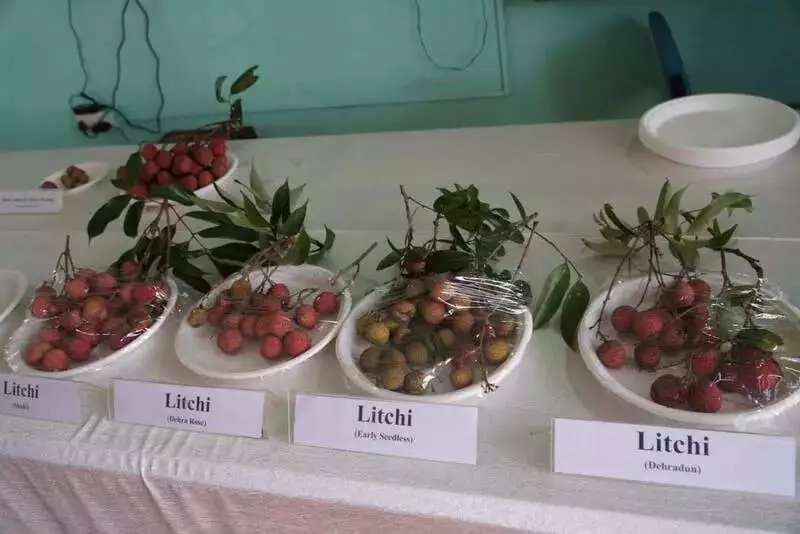
The recent Litchi Fruit Fest held at the Horticultural Experiment Centre in Chettalli, Madikeri, became a significant gathering point for the agricultural community in Kodagu. The event successfully attracted a diverse mix of participants, including both rural and urban farmers keen on exploring high-value horticulture.
National Spotlight on Kodagu's Off-Season Litchi
Inaugurating the festival, Ajay Kumar Singh, the former vice-chancellor of Bihar Agricultural University, revealed a concerted national effort. He stated that the Indian Agricultural University network is actively conducting research to expand litchi cultivation to different parts of the country. Within this national framework, Kodagu's off-season litchi production has been identified as a particularly promising area for development and focus.
Echoing this sentiment, Dr. Bikas Das, Director of the National Litchi Research Institute, provided context. He noted that while traditional litchi farming is concentrated in states like Bihar, Odisha, and West Bengal, it is the off-season varieties that are now capturing nationwide interest. Dr. Das confirmed that the development of this niche sector will receive increased emphasis under the upcoming five-year plan, signaling strong institutional support.

Local Research and Farmer Expertise Take Center Stage
The pivotal role of local research was underscored by Bose Mandanna, honorary secretary of the High Value and Foreign Horticultural Crops Development Association and a senior progressive farmer. He highlighted that the Horticultural Experiment Station in Chettalli has been conducting extensive, ground-breaking research specifically on off-season litchi cultivation, laying the groundwork for the region's potential.
Professor TK Behara, Director of the Indian Hydroponics Research Institute, praised the unique agro-climatic advantages of the area. He observed that the Western Ghats region in Kodagu is exceptionally suitable for cultivating a diverse range of fruits and vegetables. Commending the district's well-informed farming community, he stressed the dual need to develop more varieties of litchi and rambutan while simultaneously strengthening organic farming practices for sustainable growth.
Knowledge Sharing and Recognitions
The festival was not just about discussions; it was a platform for actionable knowledge transfer. Two crucial technical manuals were released during the event:
- 'Scientific Farming of Off-Season Litchi Crop'
- 'Challenges of Litchi Crop and Their Management'
These publications are designed to equip farmers with scientific solutions. Furthermore, the program honored several progressive farmers for their achievements, fostering a culture of recognition and learning.
A key feature of the fest was the dynamic interactive session between experts and farmers. This dialogue covered practical aspects of cultivation, effective marketing strategies, persistent challenges, disease management techniques, and future opportunities in the litchi value chain. To ground the theoretical discussions in reality, a field visit was also organized, allowing participants to see best practices firsthand.
The event was jointly organized by the Central Horticultural Experiment Station and the High Value and Foreign Horticultural Crops Development Association, marking a successful collaboration between research institutions and farmer associations. The festival has undoubtedly planted the seeds for a more focused and scientifically-driven approach to off-season litchi cultivation in Kodagu and beyond.






