BMW India Maintains Optimistic Outlook Despite Global Uncertainties
German automotive giant BMW has affirmed that India's consumption narrative remains robust, even in the face of ongoing geopolitical tensions and negative factors such as the Iran conflict. The company highlighted that its leadership in the luxury electric vehicle (EV) segment is proving instrumental in attracting more buyers, as apprehensions regarding potential fuel price increases grow among consumers.
Leadership Claims and Market Performance
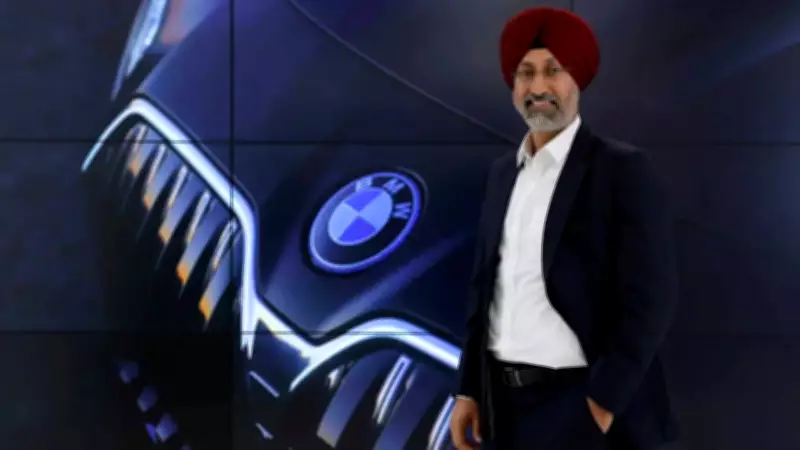
Hardeep Singh Brar, President and CEO of BMW India, expressed confidence in sustaining "strong double-digit" growth, provided geopolitical uncertainties begin to ease gradually. He acknowledged that many customers are currently postponing purchases due to market volatility, but emphasized that India's underlying consumption strength persists.
BMW India sold 4,567 units in the first quarter of 2026, marking a 17% year-on-year growth. According to Brar, data from the government's Vahan database positions BMW as the number one luxury carmaker in India, surpassing rival Mercedes-Benz. This assessment is based on recent registration figures released by the Federation of Automobile Dealers' Association (FADA).

"We were inching close, but did not expect it to happen so soon," Brar remarked, adding that the achievement was earned organically without resorting to discounting strategies. "The cars are on waiting. There is no reason why we should be discounting when the demand is so strong," he stated, underscoring the company's focus on strategic launches and customer-centric approaches rather than chasing numbers blindly.
Electric Vehicle Dominance and Fuel Price Concerns
BMW's growth is significantly bolstered by its commanding presence in the luxury EV space. The company held approximately 60% share in the luxury EV category last year, with EV penetration at 21% of its own sales. Currently, EV penetration has risen to 26%, and BMW claims about 70% share in the luxury EV market.
Brar attributed this success to a combination of EVs with long wheelbase models, which maintain driving dynamics comparable to traditional petrol and diesel cars. The iX1 luxury entry SUV is a key driver of EV sales, experiencing waiting periods in the market.
Rising concerns over fuel price hikes, partly due to the Iran war, are further propelling EV adoption. Brar noted that customers are increasingly evaluating EV economics, with potential savings of around Rs 4.25 lakh over 50,000 kilometers driven in three years. "That's mind blowing. That's a significant saving, with no compromise on performance or experience," he emphasized, highlighting the lower maintenance and running costs associated with EVs.
Challenges and Strategic Initiatives
Despite positive trends, BMW faces challenges such as the depreciation of the rupee, which Brar identified as a bigger concern than commodity prices. The company has already implemented two price increases this year and may consider further adjustments if necessary, while employing hedging strategies within limits.
Brar revealed that while prices have been raised by 3–4% this year, the rupee has depreciated nearly 18% over recent years, creating a pricing gap that cannot be fully passed on to consumers immediately. The company is balancing this through internal cost measures.
Future Launches and MINI Brand Focus
BMW India plans to launch 27 cars this year, encompassing all-new models, refreshes, and upgrades across SUVs, sedans, convertibles, and EVs, along with two motorcycles. Notably, ten of these launches will be MINI models, reflecting a strategic emphasis on growing that brand.
MINI is expected to play a pivotal role in BMW's India strategy, with the aim of doubling sales from the 730 units sold last year. Brar described MINI as a lifestyle product, with about 90% of buyers already owning luxury cars and approximately 50% coming from BMW's existing customer base. "It is also a popular gifting option — for marriage anniversaries, for children after college passing out, or as an additional car in the garage," he added, noting its appeal to customers seeking uniqueness and personalization.

While BMW asserts luxury leadership based on Vahan data, Mercedes India officials contest this, claiming they remain number one in the category based on full fiscal numbers (19,363 units) and quarterly volumes (5,131 units), citing company-declared retail figures from both manufacturers.