

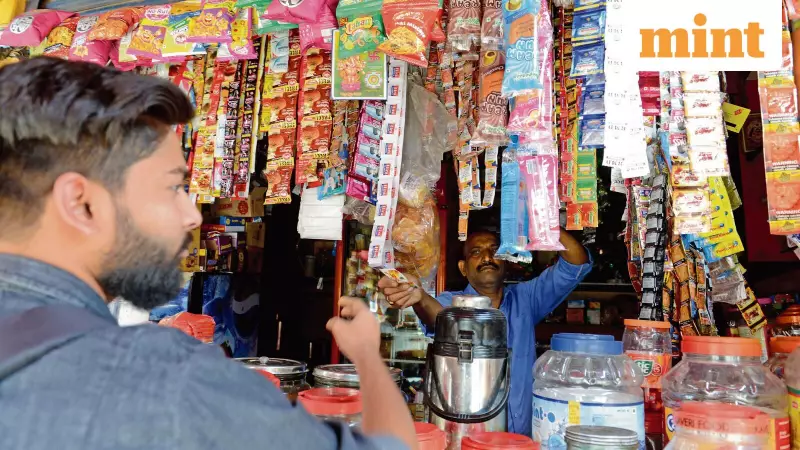
The Indian government has ushered in a significant overhaul of the taxation structure on tobacco and its products. Effective from 1 February, a new health and national security cess will be levied, replacing the existing Goods and Services Tax (GST) compensation cess, which stands withdrawn from the same date.
A Three-Pronged Tax Structure Takes Effect
This move signifies that tobacco products will now fall under a revamped tax regime. The new structure comprises three main components: excise duty, a standard 40% GST rate, and the newly introduced health and national security cess. This replaces the previous system where these items attracted a 28% GST slab along with a compensation cess.
The restructuring is enacted through two new laws passed by Parliament in the recent winter session: the Central Excise Amendment Act, 2025, and the Health Security and National Security Cess Act, 2025. A separate order regarding changes in excise duty is also anticipated.

Aligning with WHO Benchmarks and Revenue Implications
The primary objective of this tax revamp is to ensure the overall tax incidence on these harmful substances remains at the current elevated levels, even after the GST compensation cess—which has served its purpose—is discontinued. The government's stance is clear: high taxes act as a deterrent to consumption.
In December, Finance Minister Nirmala Sitharaman informed Parliament that India's taxation on tobacco was below the World Health Organization's (WHO) recommended benchmark. She noted that India's total tax incidence on tobacco is 53% of the retail price, which is substantially lower than the WHO benchmark of 75%. The WHO monitors the affordability index of tobacco products, and lower taxes do not help in discouraging use, the minister emphasized.
For instance, the Central Excise (Amendment) Act, 2025, proposes raising the excise duty on tobacco from 64% to 70% upon implementation. It is crucial to note that while cess proceeds are retained entirely by the Centre, other tax revenues like GST, income tax, and excise duty are shared with the states, making this change significant for fiscal federalism.
Industry Impact and a Call for Responsible Pricing
Tax experts highlight that this shift will directly impact overall government revenues and the distribution of funds between the Centre and states. Rajat Mohan, Senior Partner at AMRG & Associates, pointed out that the introduction of a higher GST slab alongside the new cess and excise duty alters the revenue-sharing dynamics.
"This 'reboot' period may see temporary volatility in pricing and margins as businesses reassess cost structures, demand sensitivity, and profitability," Mohan stated. He added that the industry might need time to settle at a sustainable price point.
With the National Anti-Profiteering Authority (NAA) no longer operational, there is an underlying expectation that manufacturers will act responsibly. They are expected to refrain from using this tax transition as an opportunity to artificially inflate prices beyond the justified increase from the regime change.
In a distinct approach for pan masala producers, the health and national security cess will be levied on their production capacity. This means the cess payable will be calculated based on the installed machine capacity, not the actual quantity of goods produced.
The discontinuation of the GST compensation cess aligns with the Centre's plan to fully repay the ₹2.69 trillion debt it raised to support states during the COVID-19 pandemic. Once this debt is cleared, the cess mechanism outlives its utility, paving the way for this new tax framework focused on health and national security.






