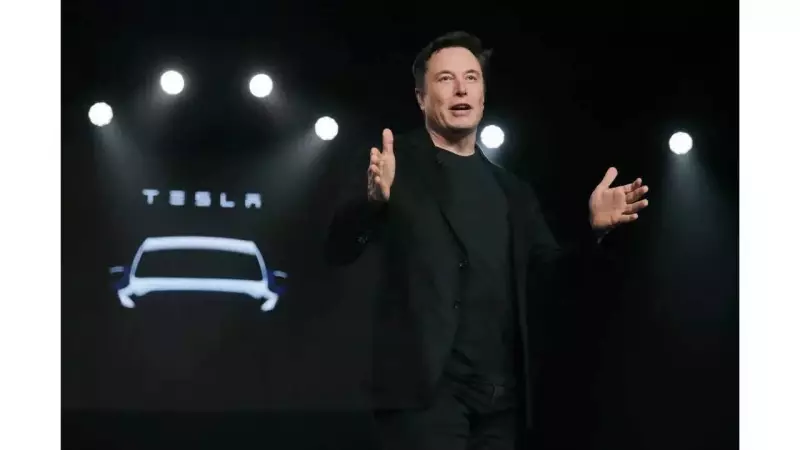
Elon Musk, the world's richest person and CEO of Tesla and SpaceX, has entered the fiery debate surrounding a proposed wealth tax in California. In a series of posts on the social media platform X, Musk defended his fortune, which is predominantly tied to his companies' stock, arguing it represents real economic value and production, not just liquid wealth.
The Core of the Debate: Is Stock Real Wealth?
The controversy ignited when Solana Labs co-founder Anatoly Yakovenko shared a post arguing that Elon Musk's stock holdings do not constitute wealth in the traditional sense. Yakovenko claimed that doubling Tesla shares doesn't enrich the world, but doubling the number of Tesla cars does. He suggested that for Musk's wealth to reach a trillion dollars, he must "organize labor" to produce tangible consumer wealth, essentially shipping products to people.
Musk directly responded to this viewpoint. "My Tesla and SpaceX shares make for almost all my wealth," he stated. He elaborated that the value of these shares is directly tied to the utility and volume of products and services his companies deliver to the public. "This means my 'wealth' can only increase due to producing more products and services for the public," Musk wrote, positioning himself as a "maker" in contrast to politicians he labeled as "takers."

The California Tax Proposal Sparking an Exodus Fear
Musk's comments are a direct reaction to a aggressive wealth tax measure being debated in California. The proposal, pushed by the SEIU-United Healthcare Workers West union, is designed to tax billionaires more heavily. Crucially, it would be applied retroactively to anyone living in California on January 1, 2026.
This retroactive clause has sent shockwaves through the state's ultra-wealthy community, giving them a narrow window to establish residency elsewhere to avoid the levy. The potential tax bills are staggering: for Musk, with a net worth of roughly $258 billion, it could exceed $12 billion. For investor Peter Thiel ($27.5 billion net worth), the tab could be over $1.2 billion.
The measure still needs signatures to reach the November 2026 ballot, but the threat alone is causing panic. Tech investor Chamath Palihapitiya warned it would trigger "an exodus of the state's most talented entrepreneurs" and admitted he is considering a move to Texas.
Warnings of Economic Self-Destruction
Hedge fund billionaire Bill Ackman amplified these concerns, issuing a stark warning about California's future. "California is on a path to self-destruction," he posted on X. Ackman argued that Hollywood's decline is being followed by the potential departure of the state's most productive entrepreneurs, who would take their tax revenues and job-creating capacities with them.
This debate unfolds against a backdrop of severe income inequality in the United States. Data from the Congressional Budget Office reveals the top 10% of families hold 69% of total wealth, while the bottom 50% hold just 3%.
While California's Legislative Analyst's Office estimates the tax could generate tens of billions in one-time payments, they also caution about long-term consequences. They warn that if billionaires leave, the state could lose hundreds of millions in annual income tax revenue, potentially negating the short-term gains from the wealth tax.
The standoff highlights a fundamental tension in modern economies: how to address inequality when the wealth of the richest is locked in ownership of companies that drive innovation and employment, rather than in easily taxable cash.