

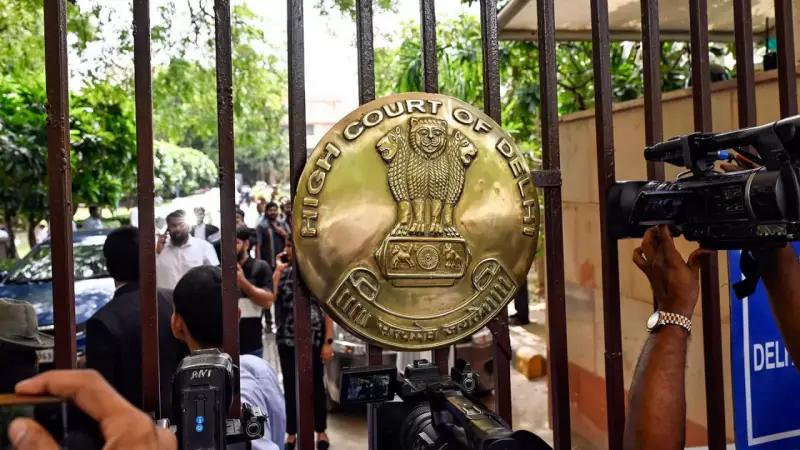
In a significant development concerning the affordability of clean air solutions, the Central government on Friday deferred any decision to lower the Goods and Services Tax (GST) levied on air purifiers. This move comes a day after the Delhi High Court suggested a review of the matter while hearing a plea related to the severe pollution crisis in the national capital.
Government's Stance on Classification and Process
Representing the Centre, Additional Solicitor General N Venkatraman informed a bench of Justices Vikas Mahajan and Vinod Kumar that air purifiers cannot be classified as medical devices, a decision taken by the Union Health Ministry. The government emphasized that the classification of goods and the fixation of GST rates involve a complex, statutory process managed by the GST Council—a constitutional body comprising the Centre and all states.
The Centre argued that any change in tax rates requires extensive consultation, licensing, and regulatory scrutiny, and cannot be fast-tracked through a writ petition. It also cautioned the court that entertaining such pleas could lead to a flood of similar demands from various sectors, undermining the established tax framework.

Court's Emphasis on Public Health and Affordability
The bench, however, underscored the severe public health impact of air pollution, which affects every citizen. The judges pointedly questioned why air purifiers, which typically cost between ₹10,000 and ₹15,000, should not be made more affordable for less privileged families. They noted that the issue has nationwide implications, especially during peak pollution seasons.
Despite these observations, the court accepted the Centre's request for more time to file a detailed response. Consequently, it deferred granting any interim relief in the public interest litigation (PIL) that sought cheaper air purifiers for Delhi's residents.
Petitioner's Argument and Next Steps
The petitioner, advocate Kapil Madan, clarified that he was not seeking a complete removal of tax but a correct classification under existing GST rules. He contended that air purifiers are wrongly placed under a higher tax slab and should be treated similarly to medical devices, which attract a lower GST rate.
With no counter-affidavit from the government on record, the court stated it could not provide interim relief at this stage. It directed the Union government to file its detailed response within 10 days and listed the matter for further hearing on January 9, following the court's winter vacation.
This development leaves the question of making air purifiers more accessible unresolved for now, placing the ball firmly in the government's court to justify the current tax structure amid growing public health concerns over toxic air.






