

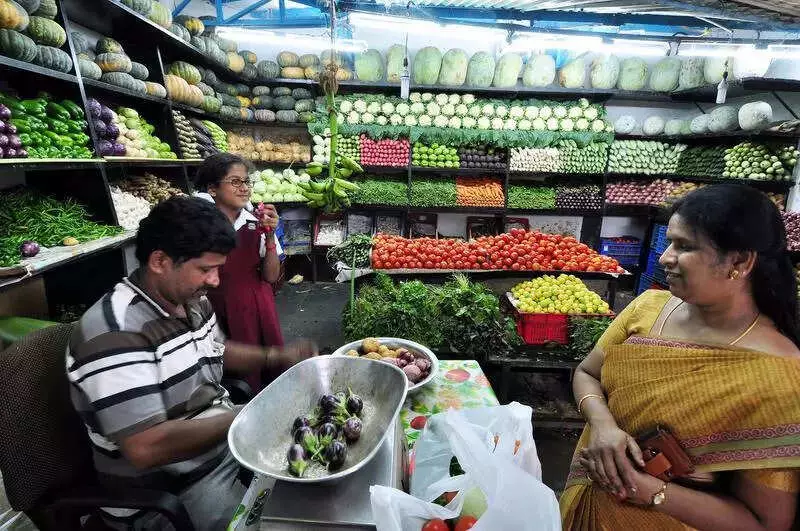
Telangana Records Unique Food Price Deflation Trend
Telangana has achieved a distinctive economic position in India. The state stands alone as the only one recording sustained negative food inflation since the beginning of the current financial year in 2025-26. This deflationary trend in food prices continues for an unusually long period, setting Telangana apart from all other states.
Eight Consecutive Months of Deflation
While several states experienced brief periods of negative food inflation, Telangana maintained this trend for eight straight months through December 2025. The state also recorded the lowest food inflation rate in December at just 0.7%. Experts suggest this pattern reflects subdued consumer spending combined with high food supply and relatively weak demand.
Raja Sethu Durai, a professor of economics at the University of Hyderabad's School of Economics, explains Telangana's situation. He states that the trend mirrors an overall pattern observed in previous household consumption surveys conducted by the central government. These surveys indicate a general decrease in food item consumption across the population.

Expert Analysis and Concerns
Krishna Reddy Chittedi, an associate professor at the same institution, identifies two primary concerns behind the deflation. He notes that negative food inflation could stem from insufficient consumer income or an oversupply of items driving prices down. Both scenarios present worrying implications according to economic experts. Chittedi emphasizes that some correction becomes necessary to address these underlying issues.
State-by-State Variations
The latest Ecowrap report reveals sharp variations in food inflation across different states. In December, only four of India's 22 major states reported positive food inflation figures. Kerala recorded the highest increase at 6.25%, followed closely by Goa at 4%. Karnataka and Tamil Nadu saw marginal increases of 0.4% and 0.2% respectively.
Kerala and Goa have consistently reported higher food inflation throughout the current fiscal year. In contrast, Uttar Pradesh recorded the highest food price deflation in December, followed by Odisha and Madhya Pradesh. These regional differences highlight the complex nature of India's food economy.
CPI Weightage Adjustments
Professor Raja Durai provides additional insight about measurement methodologies. He mentions that the ministry of statistics and planning implementation plans to adjust the weightage given to food items in consumer price index calculations downward. Telangana's negative inflation might also result from the base year used for inflation calculations, adding another layer to understanding these figures.
Understanding Inflation Measurement
Retail inflation measurement occurs through the consumer price index, which tracks price changes from the consumer's perspective. The general basket includes 299 items, while separate calculations account for 448 items in rural areas and 460 in urban areas. Food items carry the largest weight in the CPI at approximately 45.86%, followed by categories like health and education.
The Reserve Bank of India considers an overall inflation range of 2% to 4% healthy, a benchmark that broadly applies to food inflation as well. Telangana's sustained negative trend falls well outside this target range, making its economic situation particularly noteworthy for policymakers and economists.






