

Nirmala Sitharaman Presents Historic Ninth Consecutive Budget, Sets Record as Longest-Serving Finance Minister
Finance Minister Nirmala Sitharaman achieved a significant milestone today by presenting her ninth consecutive Union Budget, solidifying her position as the longest-serving Finance Minister in India's history. This landmark Budget, inspired by the theme of 'Kartavyas' or responsibilities, was delivered with a focus on long-term economic growth and social welfare, aligning with the government's vision of 'Sabka Saath, Sabka Vikas.'
Budget Highlights: No Income Tax Changes, Major Sectoral Push
The Budget did not introduce any new changes to income tax rates, maintaining stability for taxpayers. However, the Narendra Modi-led government announced a substantial push across key sectors to boost the economy. Significant allocations and policy measures were directed towards manufacturing, tourism, health, sports, and defence, among others. These initiatives aim to enhance infrastructure, create jobs, and improve public services, reflecting a strategic approach to national development.
Mixed Political Reactions: Praise from PM Modi, Criticism from Opposition
The Budget evoked a wide range of responses from political leaders and the general public. Prime Minister Narendra Modi hailed it as a strong foundation for India's journey towards the vision of 'Viksit Bharat 2047,' emphasizing its role in building a developed nation. In contrast, the Opposition termed the Budget a 'total disappointment,' arguing that it lacked concrete measures to address pressing issues like inflation and unemployment, leading to heated debates in political circles.

Viral Video: Ramdas Athawale's Poetic Budget Reaction Resurfaces
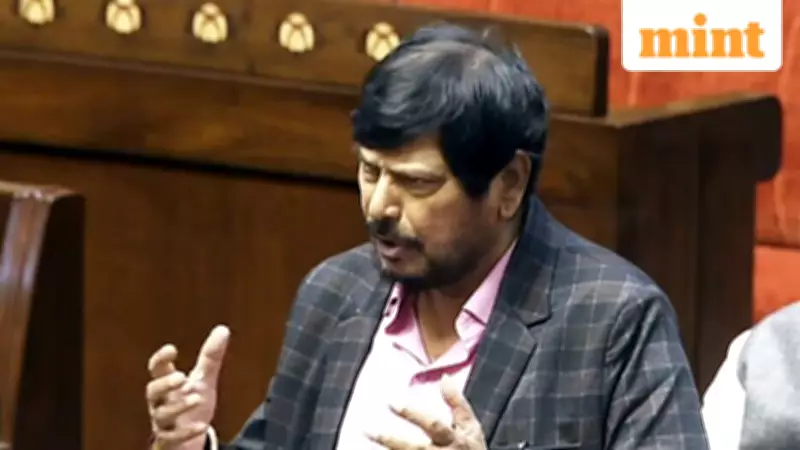
Amid the Budget discussions, an old video of Union Minister Ramdas Bandu Athawale began circulating widely on social media. Known for his impromptu delivery of poems and couplets, Athawale responded to reporters in his characteristic style in this video, reportedly from the pre-Budget period in 2019. In broken English, he expressed enthusiastic views on the Budget, repeatedly describing it as the 'best and most important.'
In the video, Athawale stated, 'This budget is very important for the middle class, the Scheduled Castes, the Scheduled Tribes, the OBCs, and the farmers. It's a very good budget, the best budget. It's also a very good budget. It's also a challenge to Rahul Gandhi and his opponents, as it will help Modi win in 2019. All taxes have been waived. This budget is the best budget.' His consistent praise and unique delivery style captured public attention, making the clip a viral sensation.
Social Media Buzz: Curiosity Over Athawale's Take on 2026-2027 Budget
As the video gained traction, several users on X, formerly Twitter, expressed curiosity about what Athawale's reaction would be to the 2026-2027 Union Budget. One user wrote, 'Can't wait for Ramdas Athawale's take on the budget — This budget is very nice budget, very best budget,' highlighting the ongoing interest in his unconventional commentary. This social media engagement underscores how political figures' styles can influence public discourse beyond policy details.
Key Policy Decisions: Price Cuts and Healthcare Relief
The Finance Minister's policy announcements included measures leading to price reductions across various products. Notably, the government provided focused relief to cancer patients by removing basic customs duty on 17 vital cancer drugs and medicines, aiming to make treatment more affordable and accessible. Additionally, customs duty on imports required for nuclear power projects has been waived until 2035, supporting energy infrastructure development. These decisions reflect a commitment to healthcare and sustainable energy, addressing critical national needs.
Overall, Sitharaman's ninth Budget marks a historic moment in Indian fiscal policy, blending continuity with strategic investments. While it has sparked diverse reactions, its impact on sectors like manufacturing and health, coupled with the viral nostalgia of Athawale's video, continues to dominate public and political conversations.






