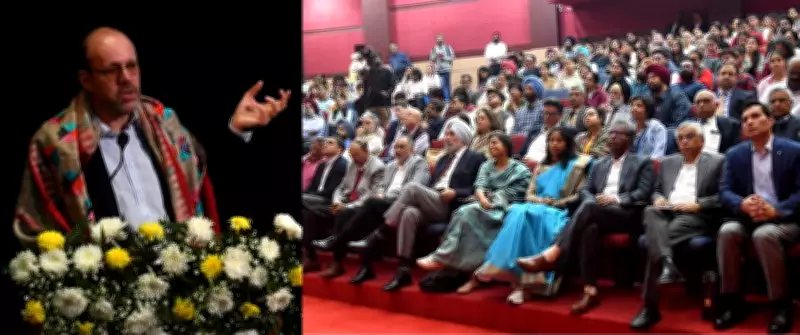
Nobel-Winning Economist Champions 'Test, Prove, Scale' Strategy for Innovation
In a compelling address, a Nobel Prize-winning economist has called for a robust framework to drive innovation in India, advocating for a methodical approach encapsulated as "test it, prove it, scale it." This model emphasizes rigorous validation and systematic expansion of new ideas to spur economic development and enhance global competitiveness.
Core Principles of the Innovation Model
The economist outlined three critical stages for fostering innovation:
- Test It: Encourage experimentation and pilot projects to assess feasibility and impact in controlled environments.
- Prove It: Validate results through data and evidence to ensure effectiveness before broader implementation.
- Scale It: Expand successful innovations widely to maximize benefits and drive large-scale change.
This structured process aims to mitigate risks and optimize resource allocation, making innovation more sustainable and impactful.

Implications for India's Economic Landscape
The economist highlighted that adopting this approach could significantly boost India's economic growth by:
- Enhancing productivity through technological advancements and efficient practices.
- Attracting investments by demonstrating a commitment to evidence-based development.
- Fostering a culture of continuous improvement and adaptability in various sectors.
By prioritizing proof-of-concept and scalability, India can better navigate challenges and seize opportunities in a rapidly evolving global economy.
Challenges and Opportunities Ahead
While the model offers a clear path forward, the economist noted potential hurdles such as bureaucratic delays and funding constraints. However, with strategic policy support and collaboration between government, industry, and academia, these obstacles can be overcome to unlock India's innovative potential.
In summary, the "test, prove, scale" framework provides a practical blueprint for nurturing innovation, positioning India as a leader in economic transformation and sustainable development.