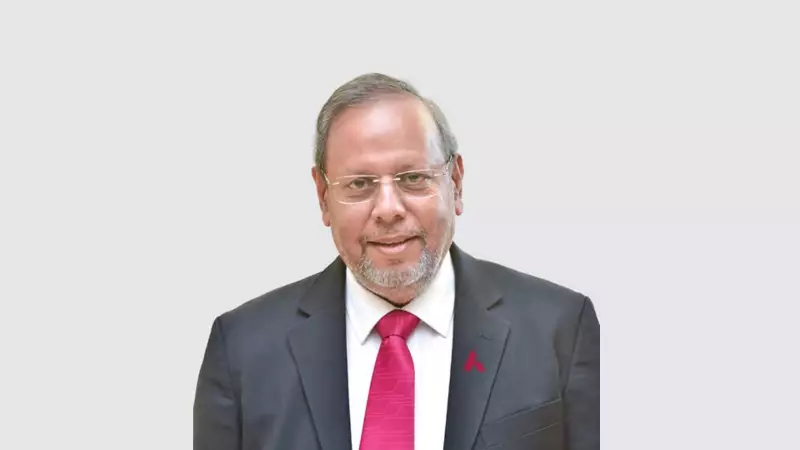
The chairman of the Economic Advisory Council to the Prime Minister (EAC-PM), S Mahendra Dev, has made a compelling case for the simultaneous growth of India's manufacturing and services sectors, stating they are complementary forces essential for the nation's economic progress. He delivered these remarks on the inaugural day of the Delhi School of Economics' Public Policy Conference, countering viewpoints that suggest a greater focus should be placed solely on services.
A Symbiotic Relationship, Not an Either-Or Debate
Dev firmly dismissed the notion of choosing between manufacturing and services. "I feel that both are needed, both are complementary," he stated. He specifically addressed the stance of experts like former RBI Governor Raghuram Rajan, who have advocated for concentrating more on the services sector. Dev highlighted the "backward and forward linkages" between the two, explaining that a thriving manufacturing base propels growth in services. "Services sector needs an expanding manufacturing sector. Some of the growth in services is also because of expanding manufacturing," he elaborated, pointing to India's diversified industrial landscape spanning textiles, electronics, and pharmaceuticals.
Defending Manufacturing: Growth in Absolute Terms
In his address, Dev also came to the defence of the Indian manufacturing sector, pushing back against claims of stagnation. He acknowledged that manufacturing's share of GDP has remained around 17 per cent, with employment at about 11 per cent. However, he insisted that focusing solely on these percentage shares is misleading. "It is not stagnant," Dev asserted. "People think the share is stagnant means manufacturing sector is stagnant; (but) it is increasing."

He provided compelling data to support his argument, revealing that in absolute terms, the manufacturing sector's output has surged from Rs 17 trillion to Rs 30 trillion over the past decade. "That's an increase of 75 per cent in 10 years," he emphasized. Furthermore, he noted that manufacturing employment has risen to approximately 72 million jobs, underscoring the importance of evaluating absolute numbers alongside relative shares.
The Services Duality and the Path to a Developed India
Commenting on the services sector, Dev highlighted its dual nature, which encompasses everything from high-skilled IT professionals to low-skill roadside vendors. This inherent duality, he pointed out, makes the formalisation of the sector a critical objective.
On the government's ambitious Viksit Bharat 2047 goal to become a developed nation, Dev clarified that the vision extends beyond just achieving a high GDP growth rate. He stated that the growth must be inclusive, sustainable, and climate resilient. For Dev, "inclusive growth is the quality of employment," which involves addressing challenges like the status of gig workers, low female labour force participation rates, and the impact of Artificial Intelligence (AI) on jobs.
When questioned about the rising trend of contract employment, Dev remained optimistic, suggesting that opportunities still exist to boost labour-intensive manufacturing in sectors such as garments. On AI, he viewed it as a potential net positive. "AI can be a net-net positive if you increase the skills because it may replace the low-skilled people but it can increase the high-skilled employment," he concluded, while acknowledging that formulating effective employment policies remains a complex challenge.