Vegetable Glut at Chennai's Koyambedu Market Fails to Translate to Lower Retail Prices
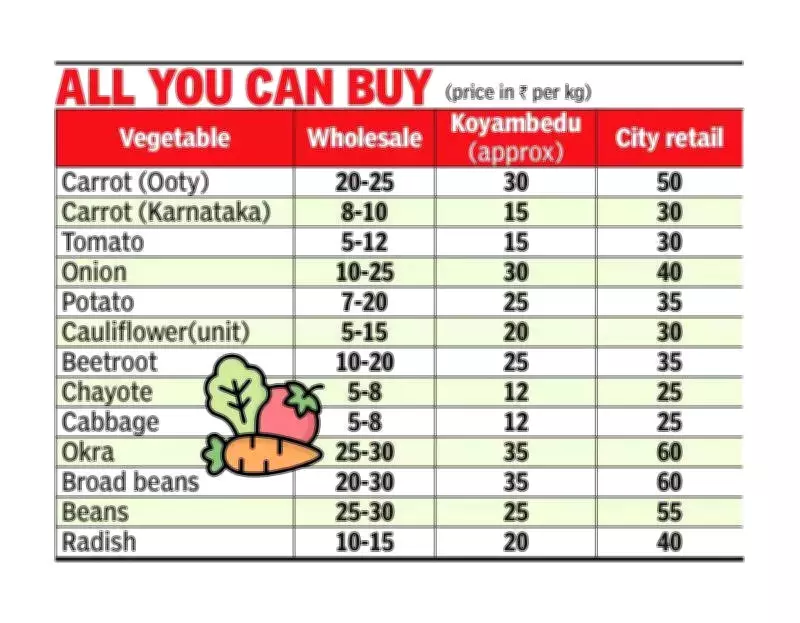
Chennai's Koyambedu wholesale market is experiencing an unprecedented overflow of vegetables, with daily arrivals skyrocketing by as much as 50%. This surge has pushed wholesale prices dramatically below 30 rupees per kilogram. However, this bounty is not fully benefiting consumers, as prices for premium vegetables at most retail outlets stubbornly remain between 25 and 70 rupees per kilogram.
Supply Surge from Across India
According to S S Muthukumar, president of the Koyambedu semi-wholesale vegetable traders association, the city typically consumes 8,000 to 10,000 tonnes of vegetables daily. "But we are now receiving up to 12,000 tonnes of vegetables every day," he revealed. This influx is sourced from multiple states: Andhra Pradesh contributes chayote, broad beans, okra, and brinjal; Karnataka supplies tomatoes; Maharashtra sends onions and potatoes; Madhya Pradesh provides peas; and Uttar Pradesh adds garlic. This diverse supply ensures both high quality and steady volume, yet demand has not kept pace with the increased availability.
Rapid Price Drops Throughout the Day
Ram Mohan, business head at NRC Agro, detailed the striking price fluctuations observed on a recent Friday. "Prices started low even during peak-hour sales between 1am and 5am, when hotels and greengrocer chains buy in bulk," he said. By 6am, as smaller businesses entered the market, prices dropped by at least 25% in hopes of stimulating more purchases. When pushcart vendors arrived around 10am, prices typically fell another 15% to 20%. This rapid decline over six to seven hours highlights the market's volatility.

Specific examples illustrate this trend vividly:
- A 10-12kg bag of cauliflower, containing about 10 heads, sold for 80 rupees at 1am, fell to 60 rupees by 6am, and was cleared out for 50 rupees by 11am.
- Sweetcorn bags of 20kg opened at 15 rupees at 1am and slipped to 12 rupees by 10am.
By mid-afternoon, many vendors, left with unsold stock, turned to social media, posting videos in desperate attempts to boost sales.
Widespread Market Patterns and Consumer Frustration
Similar patterns were evident across various vegetables. Capsicum prices dropped from 35 rupees per kg at 1am to under 25 rupees by 11am, while carrots fell from 30 to 20 rupees. Winter specialties like double beans and green peas were wholesaling for 50 and 30 rupees, respectively.
Although retail prices were only marginally higher, typically 5 to 10 rupees above wholesale, local markets in the city saw morning prices hover between 25 and 60 rupees per kg. By 11am, pushcart vendors making neighborhood rounds cut prices by at least 10 rupees, exacerbating the discrepancy between wholesale and retail costs.
This gap has left many consumers feeling frustrated. Amruthavalli R, a resident of West Mambalam, shared her experience: "I bought capsicum for 60 rupees at the store in the morning. By noon, a vendor gave it to me for 40 rupees a kg for the same quality." This sentiment underscores the challenges in translating wholesale abundance into affordable retail prices for everyday buyers.