

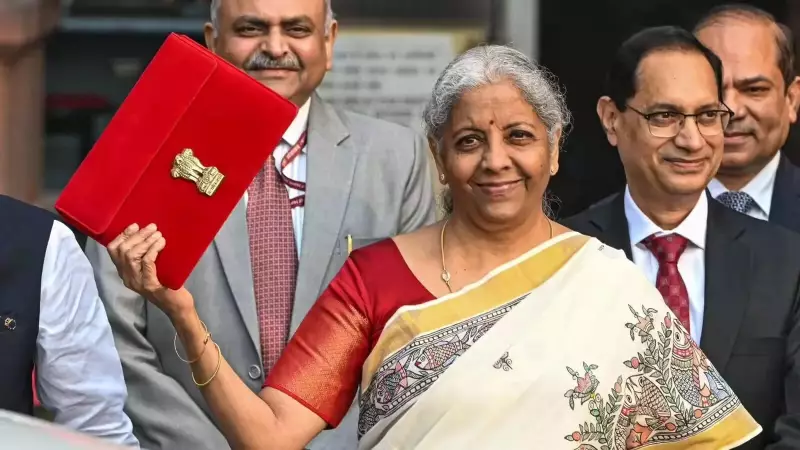
Nirmala Sitharaman's Ninth Budget: The Team Behind the Scenes
As Finance Minister Nirmala Sitharaman puts the final touches to her record ninth consecutive Union Budget, she is being supported by a seasoned team of senior bureaucrats within the Finance Ministry. This historic budget, scheduled for presentation in the Lok Sabha on February 1, comes against a backdrop of a 7.4 per cent growth rate and an uncertain global geopolitical environment. Budget 2026-27 will also mark the third full Budget of the Modi 3.0 government, making the roles of these key officials particularly crucial.
Key Officials Leading the Budget Preparation
Here are the senior bureaucrats playing a central role in shaping India's economic roadmap for the coming fiscal year:
Anuradha Thakur, Economic Affairs Secretary
As the principal architect of the Budget, Thakur heads the Department of Economic Affairs and plays a decisive role in shaping the macroeconomic framework and resource allocation for 2026-27. She also leads the Budget Division responsible for drafting all Budget documents. This will be her first Budget as Economic Affairs Secretary. A 1994-batch IAS officer of the Himachal Pradesh cadre, Thakur took charge of the department on July 1, 2025. She holds the distinction of being the first woman IAS officer to head this critical department.

Arvind Shrivastava, Revenue Secretary
Shrivastava oversees all tax proposals, which form Part B of the Budget Speech. His department handles both direct taxes (including income and corporate tax) and indirect taxes such as GST and customs duties. While this will be his first Budget as Revenue Secretary, Shrivastava brings prior experience from the Finance Ministry, having served earlier as Joint Secretary in the Budget Division. He later moved to the Prime Minister's Office, where he handled finance-related matters among other responsibilities. With expectations of customs duty tweaks and TDS rationalisation, his role is expected to be critical for revenue mobilisation in the upcoming budget.
Vumlunmang Vualnam, Expenditure Secretary
Often described as the "guardian of the purse", Vualnam oversees government expenditure, subsidy rationalisation, and the implementation of central schemes. His department is tasked with enforcing fiscal discipline, managing the fiscal deficit, and guiding expenditure planning for the next financial year. His work ensures that government spending aligns with broader economic priorities while maintaining fiscal responsibility.
M Nagaraju, Financial Services Secretary
The Department of Financial Services plays a key role in driving financial inclusion and social security schemes. Under Nagaraju's leadership, the department oversees public sector banks, insurance companies, and pension institutions. It is also central to the government's broader economic agenda, including credit growth, digital adoption, and expansion of social security initiatives that impact millions of citizens.
Arunish Chawla, DIPAM Secretary
As Secretary of the Department of Investment and Public Asset Management, Chawla is responsible for the government's disinvestment and privatisation roadmap. His department manages non-tax revenue targets arising from stake sales in central public sector enterprises, making his contributions vital for meeting fiscal targets without increasing the tax burden on citizens.
K Moses Chalai, Department of Public Enterprises Secretary
Chalai heads the department responsible for overseeing capital expenditure plans of select CPSEs and ensuring efficient utilisation of budgetary allocations. The department also monitors asset monetisation efforts and the overall financial health of state-owned enterprises, ensuring that public resources are deployed effectively.

V Anantha Nageswaran, Chief Economic Adviser
Beyond the six departments under the Finance Ministry, the office of the Chief Economic Adviser provides crucial inputs for the Budget. Nageswaran's office helps define the macroeconomic context, including growth forecasts, sectoral analysis across agriculture, industry, and services, and assessments of global risks. It also advises the finance minister on economic reforms, fiscal policy, and financial strategy, offering an independent analytical perspective.
The collaborative efforts of these experienced officials will shape a budget that addresses both domestic economic priorities and global challenges, continuing India's trajectory of growth and development under the Modi 3.0 government.





