India's Service Economy Holds Steady as Fiscal Year Approaches Conclusion
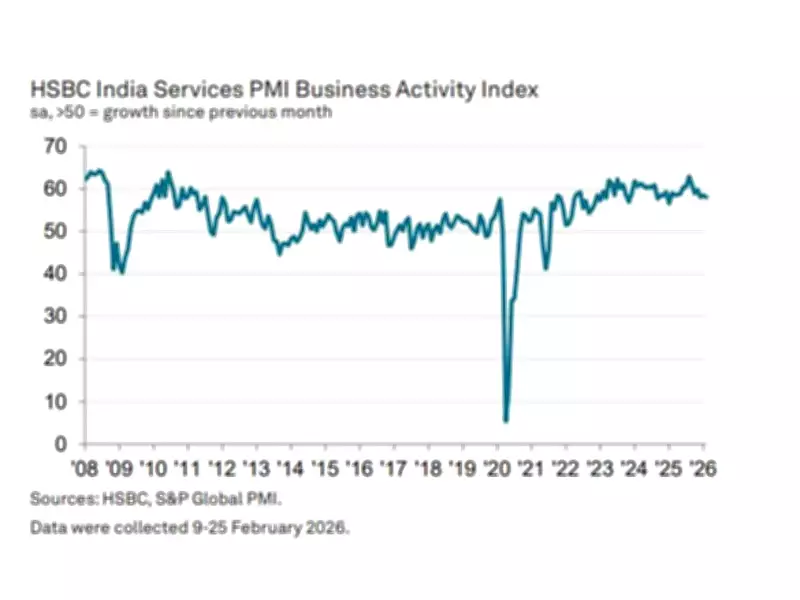
India's service sector has demonstrated remarkable resilience, maintaining a broadly stable trajectory as the current fiscal year draws to a close. According to the latest HSBC India Services Purchasing Managers' Index (PMI) data, the industry continues to exhibit robust performance, underpinned by sustained demand and optimistic business sentiment. This stability is a critical indicator of the economy's underlying strength, particularly in a period marked by global uncertainties and domestic challenges.
Key Insights from the HSBC India Services PMI
The HSBC India Services PMI, a comprehensive gauge of service sector health, has consistently reflected positive trends. The index, which measures factors such as new business, employment, and output, indicates that the service economy is not only holding its ground but also showing signs of incremental growth. This performance is especially noteworthy given the broader economic context, where sectors like manufacturing have faced fluctuations. The service sector's ability to remain stable highlights its pivotal role in driving India's economic narrative forward.
Factors Contributing to Service Sector Stability
Several key elements have contributed to the service economy's steadfastness. First, there has been a notable increase in new business orders, both from domestic and international clients. This surge in demand has encouraged service providers to expand their operations and invest in capacity enhancements. Additionally, business confidence remains elevated, with firms expressing optimism about future growth prospects. This positive outlook is often linked to expectations of favorable government policies and a gradual recovery in consumer spending.

Employment within the service sector has also seen a modest uptick, as companies hire more staff to meet rising demand. However, challenges such as inflationary pressures and supply chain disruptions persist, requiring careful management to sustain growth. Despite these hurdles, the overall sentiment is one of cautious optimism, with the sector poised to navigate the final quarter of the fiscal year effectively.
Implications for India's Broader Economic Landscape
The stability of India's service economy has far-reaching implications for the nation's overall economic health. As one of the largest contributors to GDP, the service sector's performance directly influences employment rates, income levels, and investment flows. A stable service economy can act as a buffer against volatility in other areas, such as agriculture or manufacturing, thereby ensuring a more balanced economic growth trajectory.
Moreover, this stability is likely to bolster investor confidence, both domestically and internationally. With the fiscal year end approaching, businesses and policymakers are closely monitoring these trends to make informed decisions about future strategies. The service sector's resilience suggests that India may be well-positioned to achieve its economic targets, provided that supportive measures continue to be implemented.
Looking Ahead: Prospects for the Coming Fiscal Year
As the current fiscal year nears its end, attention is shifting towards the prospects for the upcoming period. Analysts predict that the service sector will continue to play a crucial role in India's economic expansion, driven by factors such as digital transformation, increased foreign investment, and evolving consumer preferences. However, maintaining this stability will require addressing ongoing challenges, including regulatory hurdles and global economic headwinds.
In conclusion, India's service economy stands as a beacon of stability in an otherwise dynamic economic environment. The HSBC India Services PMI data underscores the sector's robust health and optimistic outlook, offering a positive signal as the fiscal year concludes. With continued focus on innovation and policy support, the service sector is expected to remain a key driver of India's growth story in the months ahead.